As an Amazon Associate, we earn from qualifying purchases. Some links on this site are affiliate links at no extra cost to you. Our recommendations are based on thorough research and editorial judgment.


Ceiling-Mounted vs Floor Air Filtration Units Compared

When you’re trying to decide between ceiling-mounted and floor air filtration units, it can feel overwhelming with all the options out there.
Do you need something that filters air in a bigger space, or would a portable option work better for your specific dust problems?
Ceiling units sit about 8-10 feet up and are great for larger areas. They catch even the tiniest particles and free up valuable floor space. This can be a lifesaver in a crowded workspace.
But, there’s something to be said for the flexibility of floor units. They can be moved around to target spots in your office that collect the most dust.
Regular maintenance is essential for both types. You’ll have to keep an eye on filters for both, but the good news is that ceiling-mounted systems generally don’t need to be serviced as often.
So, if you’re looking for something low-maintenance, that might just tip the scales for you.
Honestly, it depends on your needs. Think about how your space functions and what air quality you’re aiming for.
Are you dealing with a lot of dust in certain areas, or do you need an option that can handle a larger room more efficiently? The answer can help direct you to the right choice.
In the end, whether you go with a ceiling or floor unit, it’s all about fitting the solution to your specific needs.
What’s your top priority when it comes to air quality in your space?
Key Takeaways
- Ceiling-mounted units are ideal for larger spaces, improving air quality without occupying floor space, and efficiently capturing airborne particles.
- Floor units offer portability and accessibility, making them easy to reposition near specific dust sources, enhancing localized air purification.
- Ceiling-mounted units operate more quietly and have higher filtration efficiency, requiring less frequent filter maintenance compared to floor models.
- Floor units allow for adjustable fan speeds and simple controls, catering to user preferences but require more regular servicing due to dust proximity.
- Installation for ceiling-mounted units requires strategic height and placement, while floor units benefit from flexible positioning for optimal airflow.
Understanding Ceiling-Mounted Air Filtration Units

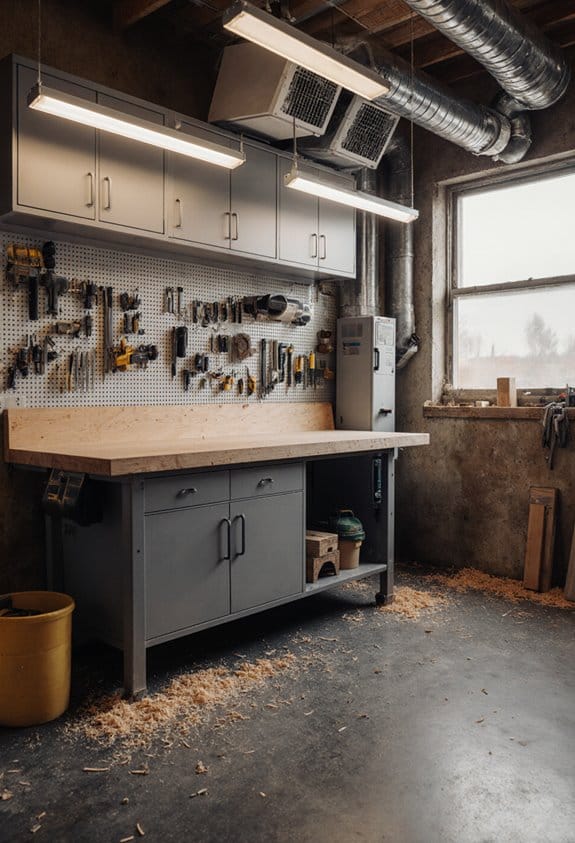
Got messy air quality in your workshop or another high ceiling space? Ceiling-mounted air filtration units might just be your best bet for cleaning things up. With these units hanging 8-10 feet above the ground, they pull air in parallel to the floor, grabbing all that fine dust before it can float around and settle everywhere else. You’ll seriously notice the difference in air quality.
Here’s the truth: these units are fantastic at controlling dust and can work with different filter types to snatch up a variety of particle sizes. A big plus is that by keeping these units off the floor, you can enjoy better air circulation without worrying about clutter taking up precious space down below.
But don’t forget—regular filter changes are a must. It’s a simple step that makes a huge impact on their performance. If you keep up with the maintenance, you’re set for consistently fresh air while you work. Ensuring regular inspections can prolong the lifespan of your equipment and maintain effectiveness.
In short, ceiling-mounted air filtration units are a smart addition to your workspace. How are you tackling air quality issues in your own area?
Advantages of Ceiling-Mounted Air Filtration Units

Have you ever noticed how dust seems to be everywhere in your workspace? It’s frustrating, isn’t it? That’s where ceiling-mounted air filtration units come into play, and they’ve got some real benefits worth considering.
These units are positioned 8-10 feet up, which means they can grab dust right out of the air before it spreads around. This is especially useful in places like workshops where airborne sawdust is a big concern. Not only do they boost your air quality, but they also free up floor space, so you won’t trip over tools or bump into furniture while moving around.
The cool thing about these systems is that many come with a variety of filter types. This means they tackle different sizes of particles, adjusting to whatever dust or debris is in the air at a given moment. Plus, if you’re worried about noise while you work, these units are often quieter. Since they’re mounted high up, they won’t distract you—or your coworkers—while you’re getting things done.
For optimal dust removal, selecting units with high filtration efficiency helps capture even the smallest particles for cleaner air.
So, if you’re tired of dust clouds or just want a cleaner workspace, consider installing one of these units. It can really change the dynamics of how you work and breathe.
Key Features of Floor Air Filtration Units

Are you tired of dealing with dust and allergens floating around your space? You might think ceiling-mounted air purifiers are the way to go, but floor air filtration units have some great perks that could really fit your needs.
First off, these units take up a bit more ground space, so placement is key. If you don’t position them just right, they could disrupt air flow rather than improve it. But here’s the thing: their portability is a big plus. You can easily move them closer to areas where dust tends to collect, like near machines that kick up particles. This targeted filtration helps keep things cleaner, which is a win for anyone dealing with dust and allergens.
Most floor units come with simple controls and adjustable fan speeds, which is nice because it means you can tailor the operation to what you prefer. However, keeping those filters in tip-top shape is essential. Since they’re often close to dust sources, you’ll need to change the filters regularly to avoid clogs.
And let’s talk about noise because that’s a big deal for many. Some models run quietly, which is perfect if you have a smaller workspace or just don’t want a lot of background hum while you’re trying to focus.
Additionally, choosing units with 99% filtration efficiency is key to effectively capturing fine particles and improving air quality over time.
Benefits of Floor Units: Portability and Accessibility
Have you ever struggled with poor air quality in your workshop or work area? It can make working difficult and uncomfortable. That’s where floor air filtration units come in.
These units are super portable, which means you can easily move them around as needed. If you’re dealing with dust from woodworking or other projects, you can shift the unit to target that area directly. Many models come with wheels or handles, so transporting them from one side of your shop to the other is a breeze. The best part is, you can place them wherever you need them most, so air quality is always at its best.
Another perk is how easy they are to maintain. You won’t have to mess around with ladders or fancy equipment to change the filters. Just about anyone can handle it! Plus, they’re typically easier on the wallet than ceiling-mounted systems. If you’ve got a smaller workshop or like to keep things budget-friendly, these units are perfect for effective air purification without costing a fortune.
Additionally, choosing units equipped with HEPA filtration ensures trapping of fine airborne particles, enhancing overall air quality.
So, here’s the trick: Choose a model that fits your workspace needs and don’t skip on maintenance. You’ll be amazed at how much cleaner the air feels. Honestly, clean air can make a huge difference in your productivity and comfort level.
How to Evaluate Airflow and Filtration Efficiency
How can you be sure that your air filtration systems are doing their job? Well, a good place to start is by measuring airflow in Cubic Feet per Minute (CFM). To get the best results, you’ll want these numbers to match your shop’s volume and aim for around 6-8 air changes per hour. It sounds complicated, but trust me, hitting those marks really makes a difference.
Ceiling-mounted units are fantastic at catching dust before it has a chance to spread out, which helps to maximize those airflow patterns. If you’re using floor units instead, just make sure they’re positioned correctly to avoid blocking any airflow. Are you thinking it sounds simple? It is, but so many people overlook this.
When it comes to filtration efficiency, quality really counts. I recommend using HEPA filters because they can trap an impressive 99.97% of particles as small as 0.3 microns. That’s pretty remarkable when it comes to keeping the air clean. Just remember to change those filters regularly. Honestly, clogged filters can cut your airflow and filtration efficiency by a staggering 25-40%. Nobody wants that!
Many high-quality dust collectors also feature automatic filter cleaning to maintain consistent performance without interrupting work.
Installation Considerations for Ceiling and Floor Units
Finding the right spot to install your air filtration units can feel like a bit of a puzzle, but it’s super important for keeping the air in your space fresh and clean. If you’re considering ceiling-mounted units, aim to hang them about 8 to 10 feet up. That height helps with airflow and keeps any furniture or obstacles away from the walls.
Now, if you want to improve air circulation, place the intake 1/3 of the way from the shorter wall. You might be wondering, why does this matter? Well, a strategic setup ensures the air is evenly filtered, making a big difference in air quality.
On the flip side, floor units are more portable. They’re also easier to maintain, but you need to plan ahead to ensure they don’t block airflow. Keep them away from corners and heavy furniture. The thing about ceiling-mounted units is that they can be trickier to install, but they excel at filtering out airborne particles.
In a nutshell, where you place either type of unit will have a huge impact on your air quality. Have you thought about the setup that would work best for your space? Additionally, considering installation simplicity can save time and effort during setup.
Are Ceiling Units Worth It?
Are ceiling-mounted air filtration units really worth the cost? If you’ve got a larger workspace, the answer is most likely yes. Dust and tiny particles can really pile up, and these ceiling systems do a great job of catching them before they float around and cause havoc.
Not only do they improve air quality, but they also save valuable floor space. That means you can set up your work areas better, keeping movement and equipment unblocked. Plus, you can use different types of filters with these units, which helps them work even better. It’s a nice perk when users notice less dust on their surfaces, leading to a healthier atmosphere.
Here’s the trick: ceiling-mounted units excel at improving airflow and promoting better circulation compared to standard floor systems. When you think about it, cleaner air can ultimately lead to a more productive workspace. So, if you’ve been mulling over whether these units are a good investment, think about the benefits they can bring to your environment.
In short, if you’re dealing with dust issues and want to create a more pleasant work atmosphere, ceiling-mounted filtration units are worth considering. Many models offer multi-stage filtration options that significantly boost dust removal effectiveness. What do you think? Would they make a difference in your space?
Maintenance: Which Unit Is Easier to Service?
Have you ever faced a dusty filter in an air purifier and wondered why it’s so tough to keep it clean? When it comes to air filtration units, both ceiling-mounted and floor models play a big role in keeping your home’s air fresh. However, how easy they are to maintain can make a big difference.
Ceiling-mounted units have a unique advantage: they’re often out of the way. Because of this, they tend to gather less dust compared to their floor counterparts. You might not even have to dismantle the entire unit just to change the filter, which is a huge plus.
Now, let’s talk about floor units. They’re typically located right where all the action is—near the floor. This means they’re more likely to get covered in dust and debris, leading to the need for more frequent maintenance. You’ll probably find yourself changing filters more often, which can add up in terms of time and hassle.
So, why does this matter? If you’re someone who wants an air filtration system that’s easier to manage, you’ll likely lean towards ceiling-mounted units for their accessibility. They generally save you a lot of time when it comes to maintenance tasks, making your life just a bit simpler.
Additionally, choosing equipment that meets ANSI Z87.1+ safety standards ensures both reliable performance and ease of maintenance.
Choosing Between Wall-Mounted and Floor Units for Space Optimization
When it comes to keeping your workspace air clean, choosing between wall-mounted and floor units can be tricky. Both options have their perks, and knowing which one works best for your specific setup can make a big difference.
If you’re working in a tighter space, wall-mounted systems might be the way to go. They keep your floors clear, which can make your workshop feel a bit more open. Plus, they’re usually easy to reach for maintenance. Just keep in mind that if they’re near where you’re creating dust, you might have to clean them more often.
On the other hand, floor units bring the advantage of portability. You can move them around as needed, which is super helpful if your workshop layout changes. However, if they’re not positioned right, they can restrict airflow, so placement is key.
Ceiling-mounted air filtration units also stand out, especially in larger workshops. They’re great at capturing dust before it even gets a chance to spread.
Also, using high-quality, customizable solutions like foam inserts can help organize and protect tools in your workspace, maximizing efficiency alongside clean air.
When to Use Air Filtration Units: Ceiling-Mounted vs. Floor?
When you’re trying to choose an air filtration unit for your workshop, it’s easy to feel overwhelmed. The size of your space and what you’re actually doing in there can really influence your decision.
Ceiling-mounted units are a solid choice, especially in larger workshops with high ceilings. They excel at capturing dust and other particles before they’ve got a chance to spread around, which can really boost the air quality. By mounting them 8 to 10 feet up, you not only improve airflow circulation but also avoid creating obstacles in the space. These units usually have squirrel cage blowers, which means they manage to move more air than standard floor models. So, if you’ve got the height, it’s worth looking into these options.
On the flip side, if your workshop is cozier, you might find that portable floor units work best. They let you move them around as needed, which can be super handy for specific tasks or spots that need a little extra attention. For example, try placing your ceiling-mounted system close to sanding areas to really up your dust collection game, while having floor units ready to tackle those localized messes. Choosing a system with high dust collection efficiency will ensure your workshop stays clean and safe.
Frequently Asked Questions
Is It Better to Have Floor Vents or Ceiling Vents?
We’ve found that ceiling vents often improve airflow efficiency by 20%, enhancing heat distribution in larger rooms. Plus, they’re easier to maintain and better for design aesthetics, despite potentially higher installation costs compared to floor vents.
What Is the 2 3 Rule for Air Purifiers?
The 2/3 rule for air purifiers suggests we place them two-thirds from walls or ceilings for ideal airflow. Considering room size, we enhance HEPA filter efficiency while minimizing noise, energy consumption, and maintenance needs.
Do Air Purifiers Work Better on the Floor or Elevated?
We can’t deny it—floor purifiers might as well be lounging on a couch! Elevated units enhance airflow dynamics, boosting particle capture and filter efficiency. Plus, they improve room layout and keep noise levels and aesthetics in check.
What Is the Best Whole House Air Filtration System?
We believe the best whole house air filtration systems are centralized, combining filtration efficiency with lower energy consumption. Though installation costs and maintenance requirements vary, improved air quality makes it a valuable investment for any home.