As an Amazon Associate, we earn from qualifying purchases. Some links on this site are affiliate links at no extra cost to you. Our recommendations are based on thorough research and editorial judgment.
Air Quality Monitoring in Workshops: Methods and Tools

Have you ever walked into a workshop and felt a bit uneasy about the air you’re breathing? It’s a common concern, especially when you think about the pollutants like particulate matter (PM2.5) and volatile organic compounds (VOCs) lurking around. These can lead to serious health issues down the line, and that’s why air quality monitoring is so crucial.
The good news is, you don’t have to be a scientist to keep tabs on the air in your space. Portable sensors are available that provide real-time data on these harmful contaminants, showing you everything you need to know right on a user-friendly dashboard. It’s like having a personal air quality assistant by your side!
Now, if you want to take your workshop to the next level, you might consider following OSHA guidelines. They offer excellent recommendations to maintain a healthy work environment. Combine that with some advanced filtration systems, and you’re well on your way to creating a safer workspace.
So, why does this matter? The truth is, a clean and safe air environment can significantly boost your productivity and overall well-being. If you’re unsure where to start, try checking your air quality with one of those sensors and make necessary adjustments as needed.
In the end, keeping an eye on air quality shouldn’t be an afterthought. It’s about making your workshop a better place to create and work. What steps are you considering to improve your workshop air quality?
Key Takeaways
- Utilize portable air quality sensors to measure particulate matter, VOC levels, and CO2 concentrations in workshop environments.
- Implement real-time data monitoring systems with cloud-based dashboards and visual feedback indicators for immediate air quality awareness.
- Regularly calibrate sensors and utilize smart algorithms to ensure accurate data interpretation and effective air quality management.
- Engage workshop members with discussions and educational materials on air quality monitoring practices and pollutant awareness.
- Adhere to OSHA and NIOSH guidelines to enhance workplace safety and maintain healthy air quality levels in workshops.
Understanding the Importance of Air Quality Monitoring in Workshops
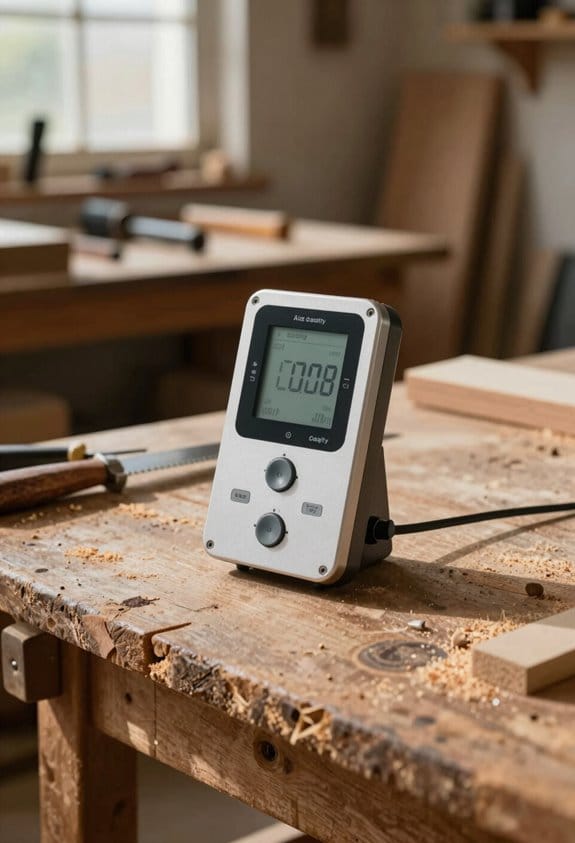
Have you ever walked into your workshop and just felt that something in the air wasn’t quite right? Many of us love to create—whether it’s woodworking, crafting, or any hands-on project—but we often overlook what we’re breathing in while we work. Air quality monitoring in workshops is key for your health and can even boost your productivity.
Think about the materials you use: wood, paints, adhesives… they all come with their own set of pollutants like particulate matter (PM) and volatile organic compounds (VOCs). These can create an unhealthy environment, leading to issues like respiratory problems or even affecting your focus. You don’t want that, right? Regularly checking the air quality helps pinpoint these pesky contaminants, letting you breathe easier as you work.
Here’s the trick: Tools like the DesignSpark Environmental Sensor Development Kit make it easy to keep an eye on temperature, humidity, and pollutant levels. You’ll get real-time feedback, making it straightforward to tackle air quality concerns. With PM2.5 often surpassing safety recommendations, why take the risk?
Creating a culture of awareness around air quality in your workshop isn’t just smart; it’s vital. It protects your well-being and creates a better work environment overall. Plus, you’ll probably find you can focus better and be more productive when you’re not worrying about the air you’re breathing.
So, what can you do to stay on top of air quality? Consider investing in some monitoring tools and set a regular schedule to check in on your space. The best part is that being proactive can make a huge difference in your comfort and health. Using a dust collector with high filtration efficiency can significantly reduce airborne particulates in your workshop air.
Common Pollutants Found in Workshop Environments
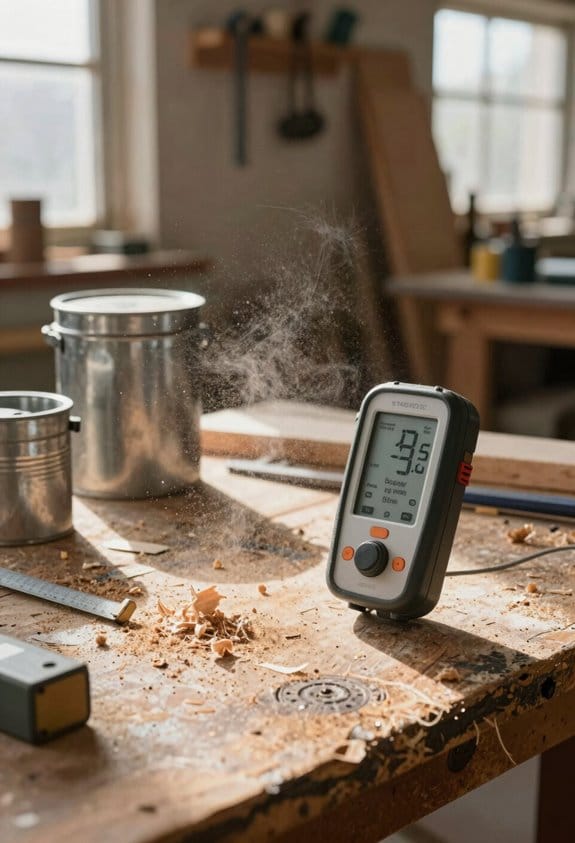
Ever walked into a workshop and wondered what’s floating around in the air? You’re not alone. Workshops can be filled with all sorts of pollutants that can mess with your health and productivity.
Take particulate matter, for example. When you’re sanding or cutting materials, tiny particles—especially the PM2.5 type—can get deep into your lungs. That’s not a fun thought, right?
Then, there are volatile organic compounds (VOCs). These come from common items like paints, solvents, and adhesives. They can cause annoying eye and throat irritation at first and, over time, could even harm your liver and kidneys. It’s essential to be aware of these things if you want to keep your workspace comfortable and safe.
Another thing to consider is carbon dioxide (CO2) levels. When you’re busy working, that number can shoot above 1000 ppm. This can be a sign that your workshop needs better ventilation, which could lead to focus issues. So, how can you ensure you’re working in a healthy environment?
Try this: invest in an air quality monitor. It’s a straightforward tool that helps you keep tabs on those pesky pollutants. Also, be aware of the guidelines from organizations like OSHA and NIOSH. Following those can make a big difference in maintaining a safe workspace.
Using a high-quality dust collector with efficient dust filtration can further improve the air quality and reduce harmful particles.
In short, keeping your workshop air clean is essential for your health and productivity. Do you ever think about the air quality in your workspace? It’s worth paying attention to!
Effective Techniques for Accurate Workshop Air Quality Monitoring
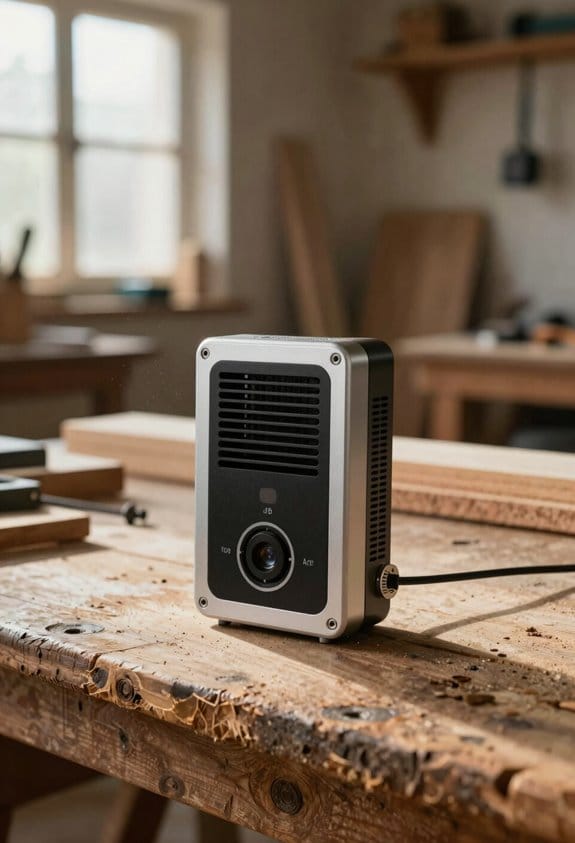
How often do you think about the air quality in your workshop? It might not seem like a big deal, but the air we breathe can really affect how we feel and work. Keeping things safe and productive means it’s crucial to keep an eye on that air quality.
Portable air quality sensors are great tools for this. For instance, I’ve found the DesignSpark Environmental Sensor Development Kit to be quite handy. These sensors can track things like particulate matter, VOC levels, and CO2 concentrations, which gives you a fuller picture of what’s going on in the air around you. Plus, with real-time data shown on cloud-based dashboards, you can quickly check in and see how things are shaping up. This could make a significant difference, especially when you realize how air quality can impact health and productivity.
The best part is a visual feedback system, like RGB light indicators. They provide clear, color-coded alerts about safety levels. You’ll know right away if something’s off without having to dig through data. So, why does this matter? Well, regularly monitoring CO2 levels can help you understand how the number of people in a room impacts air quality. This information can let you make quick ventilation changes to keep things safe and comfortable.
Additionally, using high-efficiency filtration systems like cartridge filters can greatly improve workshop air quality by capturing particles as small as 0.3 microns.
In short, keeping an eye on air quality in your workshop is a smart move. By using technology to monitor it, you’re taking important steps to ensure a healthy work environment. How are you currently tracking air quality in your space?
Choosing the Right Air Quality Devices
Have you ever walked into a workshop and noticed the air just didn’t feel right? Bad air quality can hit hard, affecting both safety and productivity. That’s why it’s super important to choose the right air quality devices.
First, think about having Indoor Air Quality (IAQ) monitors. These handy gadgets target specific pollutants like particulate matter (PM) and volatile organic compounds (VOCs), which can be pretty harmful. On top of that, consider using portable, lower-cost sensors. They can help you assess air quality right where you need it and can be easily moved around to find pollution sources.
Now, if your workshops tend to get crowded, you definitely want to include carbon dioxide (CO2) monitors. These devices are crucial for understanding how well your space is ventilated. Plus, pairing them with temperature and humidity sensors can really enhance your air quality assessments. You’ll get a clearer picture of how different factors influence the behavior of airborne pollutants.
For a truly comprehensive approach, these choices can line up to form an effective monitoring system tailored to your needs. Also, don’t forget that using NIOSH-approved filters on respirators can provide essential protection against many airborne contaminants often found in workshop environments. Now, how do you want to improve the air quality in your space? It’s all about making small changes that lead to a healthier environment.
Benefits of Real-Time Data for Workshop Safety
Ever been in a workshop and thought about the air you’re breathing? It’s a real concern, especially when you’re dealing with things like dust and chemicals. The reality is, having real-time data monitoring in place can make a huge difference for your safety.
With the right equipment, you can keep an eye on air quality all the time. This means tracking levels of harmful particles and volatile organic compounds (VOCs) right when they might spike. Imagine knowing instantly when the air isn’t what it should be. It’s not just about having the numbers—those color-coded RGB light indicators can show you the current air quality at a glance. It’s a simple yet effective way to stay alert and make smart decisions.
So, why does this matter? When you have real-time data, you can actually spot trends in the types of contaminants that come from different tasks. If you notice a spike while cutting wood or mixing chemicals, you can adjust ventilation right away. That’s how you create a safer working environment. Plus, keeping up with air quality metrics helps not only with staying compliant with safety regulations but also builds a culture where everyone looks out for one another.
The best part is, keeping track of air quality this way helps everyone contribute to a safer workshop. You’re not just passively hoping for the best; you’re actively making choices based on solid data. It’s a proactive approach that really pays off. Effective dust collection systems play a crucial role in reducing airborne particles, further enhancing workspace safety and cleanliness.
Implementing Passive Sampling for Long-Term Monitoring
Are you worried about air quality where you work or live? It’s a real concern that many people share, especially when it comes to long-term exposure to airborne pollutants. While you might be focusing on immediate issues right now, I want to share how passive sampling can give you a clearer picture of what’s happening with air quality over time.
So, what’s passive sampling? Think of it as setting up little monitors that quietly observe and collect data on things like volatile organic compounds (VOCs) and particulate matter (PM) without needing a lot of attention. Devices like diffusion tubes and filter-based systems can monitor the air for weeks or even months.
Here’s how to get started:
- Place these samplers in spots away from direct airflow and emission sources. This helps you get a true sense of air quality.
- You won’t need to check on them every day, making this a low-maintenance option for tracking pollution.
The best part is that once you gather your samples, you can analyze the data to see the average concentration of pollutants and how they fluctuate. This information is priceless. It can guide you in making changes that improve safety for you and your coworkers, and even enhance overall air quality.
So, why does this matter? Frankly, understanding these trends can lead to better health outcomes. It’s all about being proactive rather than reactive. Integrating effective HEPA filtration can significantly reduce airborne particle levels, improving the quality of the air you monitor.
How to Engage Workshop Members in Air Quality Awareness
Have you ever thought about how the air quality in your workshop affects your health? It’s something we often overlook while we’re busy creating and building, but it’s super important. That’s why I’m excited to share some simple yet effective ways to get everyone involved in air quality awareness at your workshops.
Start by bringing in tools for air monitoring. For example, the DesignSpark Environmental Sensor Development Kit is an easy way to track things like VOCs and particulate matter in the air. Not only is it hands-on, but it also gives everyone in the workshop a real sense of what’s happening around them. Plus, when you create a dashboard using Grafana, everyone can see the air quality data in real-time. It’s a great visual tool that really drives the point home about health and safety.
Regular discussions can make a big difference, too. Hosting workshops to talk about the findings from your air monitoring efforts can foster a sense of community. Encourage everyone to share their insights and suggestions for improvement. This is where the real learning and engagement happen. It feels good to be part of a group that cares about each other’s health.
Don’t forget to share educational materials about the importance of air monitoring. You want to make sure everyone knows the potential risks and best practices. This helps to create a collaborative environment where improving indoor air quality becomes a shared goal.
Using a dust collection system with effective filtration can significantly reduce airborne particles, supporting the air quality efforts in your workshop.
How to Interpret Your Air Quality Data
How can we make sense of the air quality data our sensors are collecting? It can feel overwhelming, but breaking it down helps. Start by comparing your sensor readings with trusted benchmarks like the Environmental Protection Agency’s Air Quality Standards. For instance, the World Health Organization suggests keeping annual average PM2.5 concentration to no more than 5 µg/m³ to protect our health.
Using the Air Quality Index is a quick way to see where pollution levels stand. This simple tool lets you categorize air quality and understand any health advisories. When you regularly check these numbers, you might notice patterns—like higher CO2 levels during busy workshop hours—that can point to ventilation issues.
But, there’s a catch. Discrepancies can pop up due to calibration issues, so it’s crucial to regularly ensure your sensors are accurate with reference monitors. You want reliable data to interpret your air quality effectively. Integrating an efficient dust collection system can significantly reduce airborne particles, improving the accuracy and health relevance of your air quality data.
What Air Quality Issues Can Arise in Workshops?
Ignoring air quality issues in workshops can do a number on both your health and productivity. Have you ever noticed that when you’re working with wood or paints, the air can start to feel heavy and uncomfortable? That’s not just in your head. Activities like woodworking create particulate matter (PM) that can lead to serious respiratory problems over time. On top of that, those pesky volatile organic compounds (VOCs) from paints and adhesives can really mess with your indoor air quality, leaving you with headaches or irritated eyes.
In crowded workshops, it’s even worse. Elevated carbon dioxide (CO2) levels can sneak up on you if there’s not enough air circulation, leaving you feeling foggy and out of focus. Poor ventilation is a common issue that just makes everything worse. When you don’t have good airflow, dust and hazardous chemicals start to pile up in the air you breathe.
So, what can you do about it? Start by regularly monitoring air quality along with temperature and humidity. The best part is, keeping an eye on these factors can help you catch problems before they escalate. When humidity levels are high, for example, you might find that pollutants get released into the air more easily, making it uncomfortable for everyone.
Make the effort to ensure your workshop is well-ventilated and clean. It can really make a difference. After all, who wants to work in an uncomfortable environment? Taking steps to improve air quality will not only help your health but could also boost your productivity.
In short, stay aware of air quality issues and take action. Incorporating tools with multiple brightness levels can improve visibility during maintenance and air quality monitoring tasks in dim environments, increasing both safety and efficiency. How can you start making your workshop a healthier space today?
Future Trends in Air Quality Monitoring Technology for Workshops
Have you ever wondered how clean the air in your workshop really is? It’s a concern that often gets overlooked, but as technology evolves, we’re seeing some pretty cool advancements in air quality monitoring that can help keep you safe and productive while you work.
One of the most exciting developments is the enhanced air sensor toolboxes that can measure different types of pollution at once. Think about it: devices that can track particulate matter and volatile organic compounds (VOCs) simultaneously! This means you don’t have to settle for basic detection—you can get a clearer picture of what you’re dealing with right away.
Another key trend is smart monitoring networks that use the Internet of Things (IoT). This allows data to stream in real-time, making it easier to analyze air quality on the spot. Imagine being able to check your workshop’s air conditions with just a few taps on your phone. It’s becoming a reality with mobile app integration that sends you notifications and visualizations to keep you informed.
And let’s not forget about the role of machine learning in this mix. These smart algorithms can analyze the data you collect, leading to improved accuracy in monitoring and more effective strategies for maintaining a safe workshop environment. It’s like having your very own air quality expert on call whenever you need it.
So, why does all of this matter? Well, maintaining a healthy workspace can not only improve the safety of everyone there but can also boost productivity. After all, no one can work at their best when they’re concerned about breathing in polluted air.
In short, as technology around air quality monitoring keeps advancing, it brings us tools that can make a real difference. Using devices equipped with high-efficiency MERV-13 filters can further enhance air purification in workshops. Are you ready to take advantage of these air quality advancements in your workshop?
Frequently Asked Questions
What Are the Methods of Air Quality Monitoring?
Did you know nearly 4 million workers face health risks from particulate matter daily? We use sensor technologies and various detection methods to monitor air quality, ensuring compliance with workplace regulations and safeguarding our health.
What Tools Are Used to Measure Air Quality?
We use indoor air quality monitors, sensor technology, and CO2 gauges to track pollution sources in our workplaces. These tools enhance workplace safety, helping us mitigate health impacts and guarantee a healthy environment for everyone.
Which Method Is Commonly Used to Measure Workplace Air Quality?
We commonly use real-time sensors to measure workplace air quality, helping us detect indoor pollutants and assess ventilation systems. This guarantees compliance with regulatory standards and minimizes health impacts, safeguarding everyone in the environment.
What Is the Most Commonly Used Tool for Air Quality Inspection?
We’ve found that the most commonly used tool for air quality inspection includes VOC detectors and devices measuring particulate matter. Continuous monitoring guarantees compliance with calibration standards, helping us tackle indoor pollution effectively in various settings.