As an Amazon Associate, we earn from qualifying purchases. Some links on this site are affiliate links at no extra cost to you. Our recommendations are based on thorough research and editorial judgment.

Understanding Ductwork Airflow Resistance and Friction Loss

Have you ever wondered why your HVAC system doesn’t seem to work as well as it should? Understanding ductwork airflow resistance and friction loss might just be the key to better performance. Airflow resistance comes from duct surface friction and any obstructions, which varies based on what materials you’ve got, how long your ducts are, and the kind of fittings used.
You may be interested


So, why does this matter? Keeping pressure drops between 0.5 and 2 Pa/m is crucial for airflow balance. If you use smooth surfaces and the right-sized ducts, you can cut down on energy costs and avoid that annoying uneven air distribution. The best part is, you can enhance your designs by accurately calculating the Total Equivalent Length (TEL).
Here’s the trick: pay attention to your duct layout. If you run into bends and turns, friction loss increases, and your system might work harder than it needs to.
Try this: assess your ducts regularly to catch any potential issues early on.
Truth is, there’s a lot more to learn about making your airflow as efficient as it can be. Finding that sweet spot can make a huge difference in comfort and energy bills. What steps will you take to tweak your HVAC system?
Key Takeaways
- Airflow resistance is influenced by duct material, length, diameter, bends, and surface smoothness, affecting overall system performance.
- Friction loss increases energy consumption, uneven temperatures, and can lead to fan and motor strain.
- Utilizing the Darcy-Weisbach equation helps calculate pressure drops and ensures efficient duct design.
- Total Equivalent Length (TEL) includes actual duct length plus losses from fittings, essential for proper airflow assessment.
- Selecting smooth materials and optimizing duct sizes reduces friction loss, enhancing airflow and energy efficiency in HVAC systems.
What Is Airflow Resistance in Ductwork?

Have you ever wondered why your air conditioning or heating doesn’t seem to be working as well as it should? Airflow resistance in ductwork is a big part of that puzzle. This resistance is basically the roadblocks air hits as it travels through the ducts, largely caused by friction against the surfaces.
There are a few key things that really impact how much resistance you’ll face:
- Duct material
- Length
- Diameter
- Bends in the ductwork
For example, if you’ve got rough duct surfaces or smaller diameters, that can really bump up the pressure drop. You might hear this measured in inches of water column (IWC) or Pascals (Pa)—but you don’t need to get too caught up in the numbers. Just know that smooth, larger ducts can help keep that airflow moving more easily.
So, why does this matter? Improving your duct design can lead to a healthier indoor environment and more efficient energy use. You’re not just saving on your power bill; you’re also enhancing air quality. Who wouldn’t want that?
If you’re looking to boost your HVAC system‘s performance, think about these airflow resistance factors. It can make a noticeable difference. Just remember, keeping your airflow optimal isn’t just about comfort—it’s also about keeping those costs down and ensuring your space feels just right. Incorporating efficient dust collection practices can further improve air quality and reduce the strain on your HVAC system.
Key Factors Contributing to Friction Loss in Ductwork
Have you ever wondered why your HVAC system isn’t performing as well as it should? It turns out, friction loss in ductwork could be a big part of the problem. When air travels through the ducts, several factors affect how smoothly it moves, which directly impacts how well your system works.
First off, think about air velocity—the faster the air moves, the more resistance it encounters. The duct material plays a huge role too; rougher materials can really add to pressure loss. And don’t forget about duct length; longer ducts can make it tougher for air to flow freely.
Here’s the trick: to calculate friction loss precisely, you can use the Darcy-Weisbach equation. It takes into account things like duct diameter, fluid density, and flow velocity. Those duct fittings, like bends and connections, can also create dynamic pressure losses, which are super important to consider when figuring out total pressure loss in your HVAC system.
Now, when it comes to duct materials, the smoother the better. For instance, galvanized steel is a great option because it helps reduce pressure loss compared to rougher alternatives. So, why does this matter? Keeping friction loss in check isn’t just about numbers—it’s about the efficiency of your entire system.
Regular maintenance and thoughtful duct design can work wonders in reducing friction loss. This means your HVAC system can run better and keep your space more comfortable. Also, using tools with high accuracy measurements can aid in precise duct angle setups, improving airflow efficiency. So next time you think about your heating and cooling setup, consider the little changes that can make a big difference in efficiency. How have you tackled ductwork issues in your home?
Recommended Products

Double Sided with Flex Duct Calculator

The ADI Ductulator was created by the Air Distribution Institute based on research conducted by a prestigous university to study the effect of compression in flexible duct on air flow efficiency.

Air Duct Calculator
How Friction Loss Affects HVAC System Efficiency

Do you ever wonder why your HVAC system isn’t keeping your home as comfortable as it should? One of the sneaky culprits could be friction loss. When your system has to work harder to force air through ducts, it not only struggles to maintain airflow but also drives up your energy bills.
Think about it: higher pressure results in more energy consumption. This adds unnecessary costs and can lead to uneven heating or cooling, leaving you hot in one room while shivering in another. What’s more, the extra strain on components like fans and motors could wear them out quicker, leading to repairs you definitely don’t want to deal with.
So, how can you tackle this issue? Start by paying attention to duct sizing and opting for smooth materials. This simple change can significantly cut down on friction loss. Regular maintenance is just as important—cleaning and balancing your system can make a huge difference in how well it works. This keeps the airflow working as it should and helps everything run smoothly over the long haul.
Using durable materials with high filtration efficiency also helps improve system performance by reducing dust accumulation and air resistance in ducts, emphasizing the importance of material durability.
Formulas and Techniques for Calculating Duct Friction Loss
Have you ever wondered why your HVAC system isn’t performing as well as it should? One key factor might just be duct friction loss. It’s something that can really affect how efficiently your system runs.
To tackle this issue, it’s crucial to know some formulas and handy techniques for calculating friction loss. The main equation used here is the Darcy-Weisbach equation, which breaks down like this: the pressure drop is equal to the friction factor multiplied by the length-to-diameter ratio, then times half the fluid density, all multiplied by the velocity squared. Yeah, I know—sounds complicated, but stick with me!
If you’re looking for that elusive friction factor, consider using the Colebrook-White equation or check out a Moody chart. This is where knowing your Reynolds number for different flow situations really comes in handy. Higher airflow speeds and rough duct surfaces can ramp up friction loss significantly, so keep that in mind when designing your system.
Aim for a pressure drop of around 0.5 to 2 Pa/m; this range balances efficiency and energy costs nicely, helping you get your duct sizing just right. Honestly, managing duct friction loss is about paying attention to these details. Once you get the hang of it, it’ll make a world of difference in your HVAC performance. Ensuring a minimum airflow requirement similar to 1100 CFM, as recommended for dust collection systems, can also contribute to maintaining efficient air movement in ductwork design.
Why Available Static Pressure Matters in HVAC Systems
Have you ever thought about how critical Available Static Pressure (ASP) is for keeping your HVAC system running smoothly? It’s basically the extra pressure your blower can handle, and it plays a huge role in Total External Static Pressure (TESP), which we generally want to keep around 0.50 inches of water column at rated airflow.
So, what does that mean for you? When you have components like coils, filters, and dampers in the system, they create friction that can drop the pressure. This makes it really important to factor in these resistances when calculating your system’s performance. You wouldn’t want your system working overtime without getting the airflow you need.
Here’s the trick: Check out the manufacturer’s blower curve. This can guide you in selecting the right fan speed to ensure you’re meeting those airflow demands. Managing ASP effectively can lead to a more efficient system that uses less energy—resulting in better overall performance and saving you some cash in the long run.
To recap, keeping an eye on Available Static Pressure matters for your HVAC system’s efficiency. Frankly, it can make a world of difference. Have you checked your system’s ASP recently? Understanding the role of filtration efficiency standards can also help you maintain cleaner air and reduce resistance in your system.
Total Equivalent Length: Why It Matters for Duct Sizing
Have you ever wondered why your HVAC system isn’t performing as well as it should? A big part of the puzzle lies in something called Total Equivalent Length, or TEL. It’s not just about how long your duct runs are. TEL factors in the actual duct length and adds in extra lengths from all those fittings and bends that can sneak in airflow resistance.
Calculating TEL accurately is crucial for figuring out the right design friction rate for your duct sizing. Many times, TEL ends up being longer than the physical length of your ducts because those little changes add friction losses that can really add up. So, here’s the trick: by connecting TEL with Available Static Pressure, you can ensure there’s enough airflow. This helps you make smart choices when designing your system.
Ultimately, thinking about TEL allows you to better predict the resistance in your ductwork. This isn’t just a technical detail—it seriously enhances how efficiently air moves around any space you’re working with. That means greater comfort for you and anyone else using the space.
Effective Techniques to Minimize Friction Loss in HVAC Duct Systems
Minimizing friction loss in your HVAC duct system can seem tricky, but it doesn’t have to be! One of the main culprits behind poor airflow is how the ducts are designed. Choosing larger ducts right off the bat can make a real difference. Bigger ducts mean less airflow resistance, which translates into better air delivery and a more efficient system overall.
Now, let’s talk materials. You’ll want to go with smooth surfaces for your ductwork. Galvanized steel or aluminum can help a lot here. If the interior of your ducts is smooth, there’ll be less friction as air flows through, which means you’ll experience less pressure loss.
Have you ever noticed how the bends in your ductwork can create turbulence? Well, to keep that to a minimum, make sure to strategize where you place those bends. Keeping them gentle and avoiding sharp turns will help reduce turbulence and friction loss. Regular maintenance is also key; don’t forget to clean your ducts! Dust and debris can block airflow, and nobody wants that.
Lastly, consider using dampers for balancing the system. This simple trick can help distribute airflow evenly, which is essential for managing friction loss effectively.
Additionally, using rust-resistant materials like stainless steel in your ductwork and clamp systems ensures long-lasting performance and minimizes maintenance needs.
In short, keeping friction loss low means choosing the right duct size, smooth materials, smart design, and staying on top of maintenance. By making these adjustments, you’re looking at a smoother-running HVAC system. Have you tried any of these tips before? What’s been your biggest challenge with your ductwork?
Recommended Products
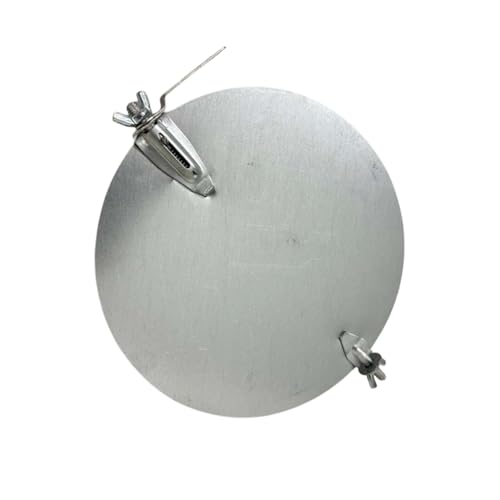
7-Inch Galvanized Sheet Metal Round volume damper with manual quadrant adjustment handle

Suitable Size: the bend end interface of air duct damper measures about 3.87 inches/ 9.84 cm in diameter while the other side is about 4 inches/ 10.16 cm in diameter and the height is about 6 inches/ 15.24 cm in height, which is suitable for inserting 4 inch ventilation duct

Suitable Size: the bend end interface of air duct damper measures about 5.87 inches/ 14.92 cm in diameter while the other side is about 6 inches/ 15.24 cm in diameter and the height is about 6.25 inches/ 15.87 cm in height, which is suitable for inserting 6 inch ventilation duct
Common Mistakes in Duct Design and How to Avoid Them
Have you ever felt like your HVAC system just isn’t living up to its potential? You might have a top-notch setup, but if your duct design isn’t on point, those vents won’t blow what you expect. One of the biggest blunders people make is underestimating friction loss. Even a little oversight here can choke airflow and hike up your energy bills.
Oversized ducts may seem like an easy fix, but they can actually kill air velocity. This not only creates noise but could also lead to warm air pooling in certain spots, giving you uneven heating or cooling. Bends and changes in ducting are another area where things can go awry. If you’re not accounting for those adjustments, you could be losing a whole lot of pressure. A quick check with ASHRAE Fitting Diagrams can really help refine your design.
It’s also crucial to pay attention to sealing practices. Air leaks? They’re a sneaky thief when it comes to static pressure. You want to avoid that drop in efficiency, trust me. And don’t forget about the material you choose. The smoother the duct, the less airflow resistance you’ll face, which means your system can perform at its best. Selecting components made from premium steel constructions can further improve durability and performance in your system.
Recommended Products

【Multifunction Pro Anemometer】Wind Speed, Wind Temperature, Wind Chill, Low battery indicator on bright backlit LCD screen. BT-100 is a portable wind speed guages can accurately measure air speed in 5 units: m/s, km/h, ft/min, knots, mph. Wind Temp in ℃/℉(Degree Celsius/Fahrenheit)

Reliable; The hot wire handheld anemometer provides precise measurements of air velocity, temperature, and in-duct airflow, and can calculate volume flow when duct dimensions are provided

Accurate In-Duct Airflow Measurement – Measure air velocity, temperature, and calculate CFM directly inside ducts for precise HVAC system diagnostics and air balancing
Implementing Total Equivalent Length in Duct Design
Have you ever struggled with uneven airflow in your HVAC system? It can be a real headache, but understanding Total Equivalent Length (TEL) can make a significant difference in duct design. TEL takes into account not just the straight runs of ductwork but also the extra lengths needed for fittings and turns. This is crucial for getting accurate duct pressure calculations, which directly affects your system’s performance.
Why is this important? Well, whenever you have components like elbows in your duct system, they add friction loss. This means that the actual length of your ducts is often shorter than what TEL will suggest. If you’ve been finding your airflow sluggish, then aiming for about 0.50 Total External Static Pressure can keep that airflow working efficiently while cutting down on wasted energy.
Here’s the trick: when you get your TEL right, it helps you figure out the design friction rate. That number is vital because it influences how well your duct systems perform overall. Plus, it’s all about balance. If your duct system is designed correctly, you’ll end up with even airflow throughout your space. Incorporating durable materials like high-density polyethylene in duct components can further enhance system longevity and performance.
Frequently Asked Questions
What Is the Acceptable Friction Loss in Ducts?
We should aim for a friction loss between 0.1 to 0.2 inches of water per 100 feet. Proper duct sizing and shape impact airflow measurement and optimize our HVAC system balance for maximum efficiency.
What Is the 2 Foot Rule for Ducts?
The 2 Foot Rule for ducts says that for every two feet of run, we should guarantee a one-inch height difference. It aids in duct sizing, airflow measurement, and ultimately enhances system efficiency and noise reduction.
Should I Use R6 or R8 Flex Duct?
We’d recommend using R8 flex duct for better insulation, enhanced airflow efficiency, and improved noise reduction. Though it may cost more upfront, the performance factors and long-term savings often justify the investment in material quality.
What R Value Should Ductwork Be?
We recommend R-6 or higher for duct insulation to enhance energy efficiency and optimize airflow dynamics in HVAC systems. Proper installation techniques and material selection are essential for effective temperature regulation and appropriate duct sizing.

