As an Amazon Associate, we earn from qualifying purchases. Some links on this site are affiliate links at no extra cost to you. Our recommendations are based on thorough research and editorial judgment.

How to Calculate Air Filtration Capacity Needs

Calculating your air filtration capacity might seem tricky, but it doesn’t have to be! Start by measuring your room’s dimensions in feet to figure out the area—just multiply the length by the width.
Once you’ve got that number, you can find out the minimum Clean Air Delivery Rate (CADR) you need. The simple formula is to divide the square footage by 1.5. This ensures your air purifier will work efficiently. So, if your room is 300 sq ft, aim for a CADR of at least 200.
Now, don’t forget about the ceiling height! If your ceilings are higher than average, you might need a higher CADR to keep things running smoothly. Have you considered how many people spend time in the room? That could also impact your air quality needs.
Here’s the trick: once you have the CADR figured out, take a little time to explore different types of filters and their energy efficiency. Each can make a big difference in your home’s air quality.
Truth is, finding the right air purifier is about more than just numbers. It’s important to think about it as part of your overall health and comfort at home.
So, what’s your biggest concern when it comes to air quality?
Key Takeaways
- Measure room dimensions (length × width) to calculate square footage, which determines air filtration needs.
- Aim for at least two-thirds of the room size in CADR for effective air purification.
- Calculate minimum CADR by dividing room square footage by 1.5 to ensure adequate airflow.
- For optimal air quality, target an air changes per hour (ACH) rate of 4 to 5.
- Consider higher CADR for rooms with elevated ceilings to accommodate increased air volume.
Understanding the Importance of Air Purification Capacity

How can you be sure the air in your home is safe and healthy? Understanding the Clean Air Delivery Rate, or CADR, can really help with that. This measurement tells you how much clean air an air purifier can produce. As a rule of thumb, you should look for a CADR that’s at least two-thirds of your room’s size in square feet. For example, if you have a 300 sq ft room, aim for a CADR of at least 200.
And it doesn’t stop there. You should also think about air changes per hour, or ACH. A minimum of 3 is okay, but you’d really want to shoot for 4 to 5, especially during those pesky high allergen seasons. Why is this important? Because the more often your air purifier exchanges dirty air for clean air, the better your indoor air quality is going to be.
If you’re looking for the best air quality possible, consider going a bit higher than the bare minimum on CADR. It could make a difference, giving you that peace of mind that comes with breathing cleaner air when it counts the most. So when you’re choosing your air purifier, keep these numbers in mind. It really could help keep you and your family feeling better and healthier.
In short, understanding CADR and ACH is key to breathing easier indoors. Many devices with high efficiency ratings help reduce airborne particles effectively. What steps will you take to improve the air in your home?
Measuring Your Room for Effective Air Purifier Fit

Have you ever found yourself wondering if your air purifier is really doing its job? One of the most important steps in ensuring that it works effectively is making sure it fits your room just right. Accurately measuring your space isn’t a chore—it’s essential. Grab a tape measure or laser measurer, and let’s get to work on figuring out your room’s dimensions.
Start by measuring the length and width of the room. For example, if your room is 15 feet long and 12 feet wide, that’s 180 square feet. It’s not just about the floor space, though. Don’t forget to check the height, too! If your ceilings are higher than the usual 8 feet, that’s going to play a role in how much air your purifier needs to filter.
So, why does this matter? Knowing the size of your room helps you figure out the Clean Air Delivery Rate (CADR) you should look for in an air purifier. A good rule of thumb is to aim for a CADR that’s about two-thirds of your total square footage for optimal air cleaning.
Also, consider air purifiers with HEPA filtration technology, which captures 99.97% of particles down to 0.3 microns, significantly improving air quality.
Next time you think about upgrading your air purifier, remember to take a couple of minutes to measure your space accurately. It’ll make all the difference in keeping your air fresh and clean! Have you measured your room yet?
What Is CADR and Why Does It Matter for Your Air Filter?
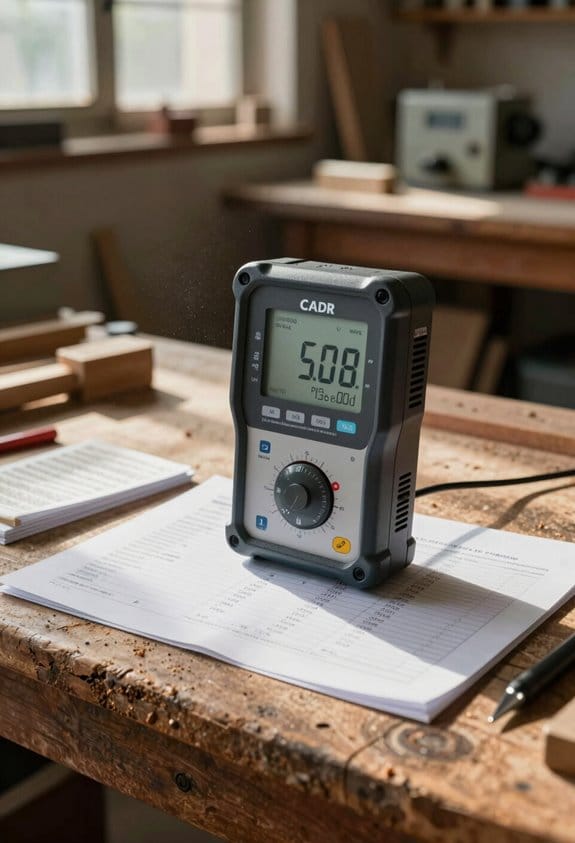
Why is it important to know about CADR when you’re on the hunt for an air purifier? Clean Air Delivery Rate, or CADR for short, is all about how well an air purifier cleans the air in your space every minute. It measures effectiveness with common indoor pollutants like dust, pollen, and smoke, helping you understand how quickly your air can be purified. A higher CADR means the machine is working more efficiently.
Here’s the trick: aim for a CADR that’s at least two-thirds of your room’s square footage. For instance, if you have a 300 square foot room, you want to look for a minimum CADR of 200. And don’t forget—CADR ratings are based on standard 8-foot ceilings. If your room is taller than that, you’ll need a purifier with a higher CADR to keep up with the increased air volume and maintain good air quality.
So, why does this matter? It’s not just about having cleaner air; it’s about making sure your air purifier can handle your specific space effectively. The right CADR can really make a difference in how well your air purifier works for you. Additionally, selecting devices with energy-efficient features can optimize performance while reducing electricity costs.
Calculating the Minimum CADR for Your Space
Have you ever walked into a stuffy room and instantly felt the air quality just wasn’t right? Maybe you have allergies or just want a healthier living environment. Figuring out the minimum Clean Air Delivery Rate (CADR) for your space is super important for keeping the air fresh.
To calculate your room’s CADR, you’ll first want to measure its square footage by multiplying the length by the width. For example, if your room is 300 square feet, you’ll need a CADR of at least 200. Just divide the square footage by 1.5 to get that number. It’s crucial that the CADR meets or exceeds this minimum to ensure your air purifier is effective.
But what if your ceilings are higher than average? In that case, consider going for a higher CADR rating. More air volume means you’ll need stronger purification. Honestly, a higher CADR rating translates to faster air cleaning—this is key if you’re dealing with a lot of dust or if anyone in your household has allergies.
Choosing equipment with adjustable elements can help tailor the air purification process to your specific environment for optimal results.
How Ceiling Height Impacts Air Purifier Selection
Ever wondered why the height of your ceilings matters when choosing an air purifier? It’s a surprisingly big deal! If you’ve got higher ceilings—say, a 10-foot ceiling instead of an 8-foot one—you’ve got more cubic space that needs to be cleaned. This means you actually need a higher CADR (Clean Air Delivery Rate) to do the job right.
Let’s break this down. For a 200-square-foot room with an 8-foot ceiling, you’d typically look for a minimum CADR of 133. But if that same room has a 10-foot ceiling? You’d need a stronger unit to handle the increased air volume. This is crucial for maintaining a good air change rate, which is often recommended to be at least 4 times an hour. Higher ceilings mean more air to circulate and purify, so keep that in mind when choosing your purifier.
Here’s the trick: calculate the total cubic footage of your space before making a purchase. It’s a simple formula: multiply the room’s area by the ceiling height. Once you have that number, you can better gauge the CADR you need. Don’t overlook this step—you want to ensure that you’re breathing easy in your home.
So, why does this matter? If you pick an air purifier that isn’t powerful enough for your room’s volume, you might end up with stale air, and that’s not good for anyone! It’s all about creating a healthier living environment for yourself and your loved ones. Also, just like selecting tools with good pressure compatibility, matching purifier capacity to room volume ensures safe and effective operation.
Ensure Optimal Performance With Proper Air Changes per Hour (ACH)
How can you make sure your air purifiers are doing their job effectively? One key thing to understand is Air Changes per Hour (ACH). This metric lets you know how frequently your purifier can refresh the air in your space. For most people, a minimum ACH of 4 is a good target, but if you have allergies or other sensitivities, aiming for 5 or higher is a smart move.
Want to figure out your ACH? It’s pretty straightforward. Just use this formula: (Clean Air Delivery Rate × 60) ÷ room cubic footage. For example, if you’ve got a room measuring 1,600 cubic feet and an air purifier with a CADR of 300, you’d see an ACH of around 11.25. That’s pretty impressive! Higher ACH ratings are particularly important in spaces where allergens or pollutants are a concern — they help ensure the air quality remains top-notch.
So, why does this matter? The quality of air you breathe can significantly impact your health and comfort. If you’re in an environment with a lot of dust, pet dander, or other irritants, having a purifier that can refresh the air quickly makes a big difference. Truth is, it can help reduce headaches, enhance sleep quality, and even improve focus during the day. Matching your ACH target with the appropriate airflow capacity ensures optimal filtration efficiency for your workshop environment.
Choosing the Right Filter Type for Effective Pollution Control
Choosing the right filter type can feel like a daunting task, especially when the goal is to breathe cleaner air. Have you ever thought about how essential Air Changes per Hour (ACH) are for keeping your indoor environment fresh? It’s all about letting that air flow, but the choice of filter can make a huge difference too.
Take HEPA filters, for example. They’re a solid option because they capture 99.97% of particles that are 0.3 microns and larger. This means they’re fantastic at tackling pesky allergens and dust that can linger in your home. On the flip side, if you’re dealing with funky smells or volatile organic compounds (VOCs)—you know, those sneaky chemicals that come from cleaning products and paints—activated carbon filters are the way to go. They’re particularly useful in spaces like kitchens or areas with pets.
Now, when you’re picking out filters, don’t forget to look at the MERV rating. The higher the MERV rating, the better the filtration efficiency. Here’s the trick: coupling the right filter with the specific pollutants in your space can really step up your air-cleaning game. For instance, using a pre-filter can catch larger particles before they hit your HEPA filter, which not only optimizes your air quality but also helps extend the life of the HEPA filter. Cartridge filters with high filtration efficiency can capture particles as small as 0.3 microns and significantly improve dust collection performance.
How to Achieve Energy Efficiency With Your Air Purifier
Do you ever wonder how you can breathe easier at home without wrecking your energy bill? Cleaning the air in your space is important, but it’s equally crucial to think about energy efficiency when using an air purifier. Not only does this help you save money, but it’s also a win for the environment.
Here’s the trick: Look for a model with a Clean Air Delivery Rate (CADR) that’s at least two-thirds of your room size. This way, you’re getting effective air filtration without overdoing it. During normal times, running your purifier on a lower fan speed can really cut down on energy use. You’d be surprised at how much energy you can save just by adjusting the settings on your purifier.
Don’t forget about those filters! You should regularly swap them out as recommended. If you let the filters get too dirty, the motor has to work harder, and that just drives up your electricity costs. And if you can find an air purifier that offers energy-saving features like auto mode or timers, that’s going to help you out a ton as well.
While you’re at it, keep an eye out for units with that Energy Star certification. It’s a great way to know you’re choosing a product that’s proven to be energy-efficient while still doing a solid job with air filtration.
Also, ensuring a precise fit between your purifier and ventilation systems can significantly enhance airflow efficiency and reduce energy waste.
In short, being mindful of how you use your air purifier can make a big difference. So, what steps are you going to take to make your air cleaner and your bills lighter?
Practical Tips for Selecting an Air Purifier Beyond CADR
Selecting an air purifier can feel overwhelming—how do you know which one will truly help with your specific air quality issues? While the Clean Air Delivery Rate (CADR) is important, it shouldn’t be your only consideration.
Consider what kind of pollutants are floating around in your home. Are you dealing with allergens, pet dander, or maybe smoke? Look for filters that cater to those needs. For example, HEPA filters are fantastic at trapping tiny particles, while activated carbon filters are your best bet for reducing harmful volatile organic compounds (VOCs).
Also, think about the size of the space you need to clean. An air purifier that’s too small won’t do a great job, so make sure it matches the room size. It’s also worth keeping energy efficiency in mind—if you’re concerned about electricity bills, look for models that have the ENERGY STAR rating, as they are designed to consume less power without sacrificing performance.
In addition, don’t skip over user reviews; they can offer real insight into how well a product really works in everyday settings. If possible, find models with air quality sensors that can detect when the air in your space needs to be purified. Considering devices with built-in safety features such as automatic shutoff can also enhance overall reliability and user safety.
FAQs on Air Filtration Needs
Do you ever feel like the air inside your home isn’t as fresh as it should be? Figuring out your air filtration needs might seem tricky, but it’s pretty important for keeping your indoor air quality in check. Here’s a simple way to get started.
First things first, let’s talk about room size. To get the square footage of a room, you just multiply the length by the width. For example, if you have a room that’s 12 feet by 10 feet, that equals 120 square feet. Now, to make sure you’re getting good air purification, you want a Clean Air Delivery Rate (CADR) that’s roughly two-thirds of your room size. So for our 150 square foot room, you’ll need a minimum CADR of about 100.
Now, on to air changes per hour (ACH). Ideally, you want to hit at least 4 ACH in most settings. This means your air purifier should be able to cycle through the room’s air four times every hour. But hey, if you’ve got higher ceilings, you might need a purifier with a higher CADR rating. It’s all about moving more air around.
So, why does all this matter? Simply put, better air quality leads to better health. When you choose an air purifier tailored to your room’s size and needs, you’re actively working towards a fresher living space.
To sum it up, pay attention to your room size, get the right CADR, and consider the ACH. Your indoor air will thank you! What steps will you take next to improve the air quality in your home? Regular replacement of filters is also essential to maintain high filtration efficiency and consistent performance over time.
Frequently Asked Questions
How to Calculate Air Purifier Capacity?
To calculate air purifier capacity, we measure the room dimensions first. Then, we consider the air quality needed and choose the appropriate purifier size and filtration types to match our requirements for effective air cleaning.
What Is the 2 3 Rule for Air Purifiers?
We find the 2/3 Rule guides us to choose an air purifier efficiency that matches our room size, ensuring it tackles air quality issues effectively, considering filter types to optimize every breath we take together.
How Many CFM Do I Need for an Air Purifier?
To determine our CFM requirements, we should consider room size and desired air quality. Higher filtration efficiency often means we need more CFM; let’s guarantee we choose an air purifier that meets those needs effectively.
How Do You Calculate Air Filtration?
When we breathe, we deserve clean air. To calculate air filtration, we assess room size, consider CADR ratings, and focus on filtration efficiency to guarantee ideal air quality for our health and comfort.


