As an Amazon Associate, we earn from qualifying purchases. Some links on this site are affiliate links at no extra cost to you. Our recommendations are based on thorough research and editorial judgment.


Bench Dog Systems Explained: Types and Applications

Are you tired of your workpieces sliding around when you’re trying to make that perfect cut? It’s a common struggle for woodworkers. That’s where bench dog systems come into play, providing the extra stability you need during various tasks.
You may be interested


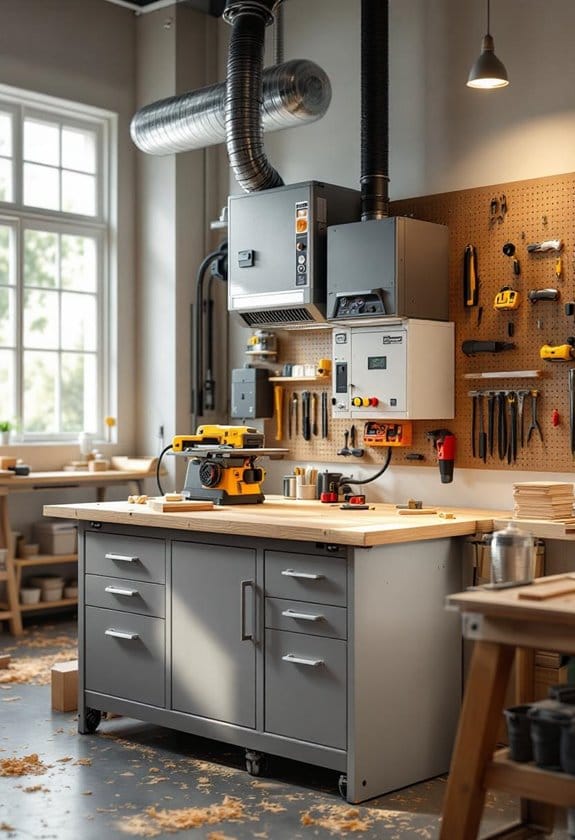
With standard diameters of 19mm and 20mm, these little tools can fit in most pre-drilled holes found in workbenches. You can go with traditional wooden bench dogs if you like the classic touch or opt for more modern versions made from metal or plastic, depending on your style and application. Both types have their advantages and can really help in securing your workpieces for accuracy.
Here’s the trick: bench dogs aren’t just for holding your wood steady; they can also be fantastic when you’re using jigs and fixtures. This can greatly improve your clamping and let you focus on making those precise cuts.
Plus, knowing how to integrate them into your workflow can really elevate your woodworking process—so why let them sit on the sidelines?
In sum, these simple tools can make a big difference in your projects. Have you tried using bench dogs in your woodworking yet? If not, it might just be the practical upgrade you didn’t know you were missing.
Key Takeaways
- Bench dogs secure workpieces in place and enhance stability during woodworking tasks by fitting into pre-drilled holes in workbenches.
- Types of bench dogs include traditional wooden options, modern metal/plastic designs, and specialized self-centering variants for diverse applications.
- Bench dogs facilitate precise cuts, drilling, and support for large workpieces while offering solutions for repetitive tasks and assembly processes through jigs and fixtures.
- Accessories like fences and corner attachments improve alignment, while clamping pads minimize workspace clutter and ensure secure work placements.
- When choosing bench dogs, consider the hole diameter, collar size, body protrusion length, materials, and systems like Power-Loc for added functionality.
Understanding Bench Dogs: Their Purpose and Benefits

Have you ever struggled to keep your workpiece in place while woodworking? It can be a pain when things start sliding around. That’s where bench dogs come in. These handy little tools may not get a lot of love, but they’re crucial for making your workbench truly functional.
Bench dogs are basically cylindrical or square pegs that fit into pre-drilled holes in your workbench. This allows you to secure your workpiece through various clamping methods. They’re super versatile! You can use them as stops to prevent sliding, to line things up for drilling, or even to stabilize longer boards. Plus, they come in standard sizes—mostly 19mm and 20mm in diameter—so they’ll suit a variety of worktop thicknesses. You can make them out of wood, brass, or plastic depending on your preference.
Here’s the trick: some modern designs even feature spring-loaded mechanisms that let them retract into the bench. This not only makes them safer, but also easier to use overall. By doing the job of traditional clamps, bench dogs can really help you get the most out of your woodworking projects.
Additionally, using accessories made from durable materials ensures longevity and consistent performance in your workshop.
So, why does this matter? If you’re looking to improve efficiency and precision in the workshop, adding bench dogs to your toolkit is definitely worth considering. They can make your projects go smoother and more accurately—definitely something to think about!
In short, bench dogs are essential for any workshop. Have you tried them yet, or are you still struggling with those old clamps?
Recommended Products

【Obtain Patents】Patented 3/4" Work bench dog hole clamps woodworking. 2 Pack/Set. Quick clamp and release design. Easier to handle than common hold down clamps woodworking. Bench dog clamps are your ideal woodworking tools and accessories

Perfect Combination: Provides clamping force in three directions. (Horizontal and vertical clamping force) Prevents the plate from rising due to squeezing from both sides. Better fixation effect and wider application.

Strong Compatibility: Our bench dogs are designed for a perfect fit in standard 3/4" (19mm) holes, ensuring seamless integration with your MFT table for hassle-free setup.
Let’s Explore How to Use Bench Dogs Effectively

Have you ever struggled to hold your workpiece steady while planing or routing? It can be incredibly frustrating when you’re trying to achieve precision in your woodworking projects. That’s where bench dogs come in, though they might seem like just simple accessories. When used effectively, they can make a noticeable difference in your workspace.
Try this: Position your bench dogs at different heights based on your needs. This simple trick provides stable support for various tasks, ensuring you maintain accuracy. If you’re working with long boards, using two bench dogs together can be a big help. They clamp those boards securely in place, preventing them from drooping and keeping your working surface nice and flat.
Now, here’s the catch—make sure your bench dog holes are clean and the right size. Slippage can ruin your progress, and nobody wants that. It’s a quick check that can save you a lot of headaches. And if you get spring-loaded bench dogs, they’ll retract into your bench, which not only helps keep your workspace safe but also makes them easy to access.
Honestly, replacing traditional clamps with bench dogs can really clear up the clutter in your workspace. You’ll find that your setup becomes more efficient when you don’t have to struggle with those bulky clamps. To maintain this efficiency, it’s important to regularly check for wear and tear on your bench dogs to ensure they perform optimally.
Recommended Products


FITS PERFECTLY: These versatile bench stops fit snug and tight into 3/4 (19mm) benchtop dog holes
Types of Bench Dogs: Traditional, Modern, and Specialized

Have you ever struggled to hold your workpiece steady while trying to get the perfect cut? It’s a common challenge for woodworkers, but the right bench dogs can make all the difference. There are three main types to consider: traditional, modern, and specialized. Each type serves a unique purpose and can really help streamline your woodworking process.
Traditional bench dogs are often made from wood and fit snugly into dog holes. They do a great job stabilizing pieces during hand tool tasks. If you prefer a classic approach, these might be your best bet. On the other hand, modern bench dogs usually come in durable metal or plastic. They often feature sleek designs and some even have spring-loaded mechanisms for quick deployment. This can be especially handy when you’re moving between tasks.
So, why does this matter? Specialized bench dogs offer advantages too. For instance, some come with chamfered designs to help self-center your workpieces for precise positioning. This is great when you need consistency in your work. Most bench dogs have standard diameters of 19mm or 20mm, making them compatible with a wide range of workbenches.
The best part is that knowing these options lets you pick the right tools for the job. Whether you’re going for the classic feel of traditional dogs, the efficiency of modern options, or the precision of specialized ones, you can find the perfect match for your woodworking needs. Using complementary tools like cabinet scrapers can further enhance your woodworking precision and finishing quality, ensuring smoother surfaces on your projects with minimal effort. cabinet scrapers
Recommended Products

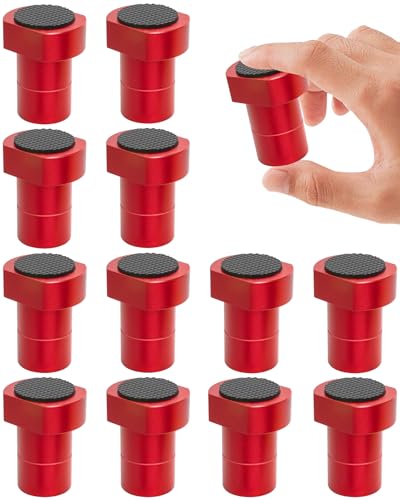
【Compatible Size】Includes 12 pack of bench dogs. Designed to seamlessly fit any standard 3/4" (19mm) dog holes, these bench dogs can be directly inserted into various MFT workbenches for effortless installation, ensuring simple and user‑friendly operation.

Multi-functional use: Bench dog stops effectively keep lumber in place during various woodworking operations such as routing, cutting, and sanding, providing a secure hold on workbenches with their squared clamping pads.
Enhancing Smarter Workflows With Bench Dog Accessories
Have you ever found yourself struggling to keep your workpieces steady while you’re trying to get that perfect cut? It’s frustrating, right? Well, bench dogs might be the solution you’re looking for, but did you know accessorizing them can make a huge difference?
Bench dog accessories, like fences and corner attachments, can really help with precise alignment. They ensure you maintain a smooth workflow on your bench top. Adding clamping pads can also help secure your workpieces without cluttering up your work area. This gives you the freedom to actually use the entire surface of your bench without feeling cramped or overwhelmed.
Innovative tools like dog hole plates and holdfasts can adapt to whatever shape you’re working with, expanding your clamping options. This versatility not only enhances production-type workflows but also gives you the flexibility you need for those more complex projects. It’s all about getting the right accessories to convert your bench dogs into multi-functional tools that yield impressive results.
In the end, a few carefully chosen accessories can truly transform your woodworking experience. Utilizing accessories with adjustable height features can further optimize your setup for various woodworking tasks. What accessories have you found that have made a real difference in your shop?
Recommended Products

INCLUDES: (4) Work Gripper Stops

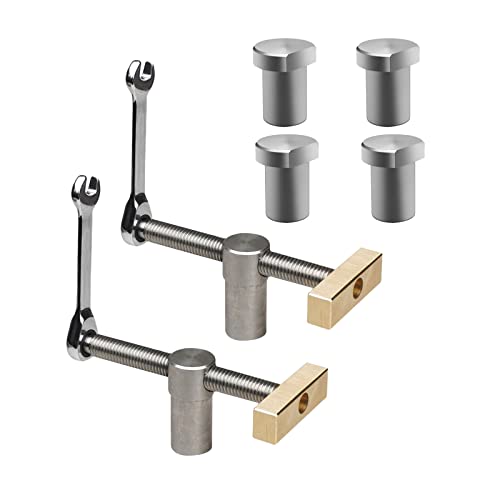
Package includes 2 pcs clamps, 4 pcs bench dogs and 2 pcs ratchet wrenches, fit for 3/4 inch (19mm) workbench dog holes.

Classic Baseball Cap: Traditional low-profile baseball cap designed for everyday wear; this stylish faded blue hat features a clean embroidered Rockler logo, making it a versatile men's baseball cap or women's baseball cap for shop, outdoor, or casual use
Choosing the Right Bench Dog for Your Needs
Choosing the Right Bench Dog for Your Needs
So, you’re ready to pick out a bench dog but don’t know where to start? It can be tricky figuring out which one works best for your setup. Let’s break it down together.
First off, consider the hole diameter. Most benches come with a standard of 20 mm, but if you want a precise fit, going for something like 19.98 mm can really help cut down on any wiggle. Next up, think about collar size—larger collars, like 25 mm, can make it easier to remove your bench dog, especially if you’re working with thicker surfaces.
Now, don’t forget about the body protrusion length. This is going to vary based on the thickness of your workbench, ranging from 18 mm all the way up to 70 mm. So, what’s your bench like? Matching this length to your specific setup is key for making your tasks easier.
Material is another thing to consider. You’ve got brass, which not only offers great durability but also looks nice, and then there’s plastic, which is lighter and often a little easier on the wallet. It’s all about what works best for your projects and budget.
If you’re looking for something a bit more versatile, the Power-Loc Bench Dog system could be worth checking out. It’s excellent for both power and hand tools, providing a solid way to clamp things down from the top.
Also, keeping in mind the stability and support features of your workbench can greatly enhance the effectiveness of your bench dog setup.
In the end, the right bench dog for you is all about personal needs. What matters most to you in your woodworking setup?
Recommended Products
【High Quality Material】: 20mm workbench dog clips are made of high quality stainless steel and brass, no rust, no corrosion, CNC precision machining, not easy to break or bend, long service life.
Secure & Stable: Achieve precise woodworking with 6 aluminum bench dogs designed for 100/127 inch=0.7874inch (20mm) workbench holes. Prevent slipping during intricate tasks like routing, cutting, and sanding.

What you will receive: 4 x 20mm Bench Dogs and 2 x Extra large 20mm bench clamps(length=200mm), the clamp is made of quality aluminum alloy and stainless steel; Perfect workmanship,very well and neatly processed.
Frequently Asked Questions
What Are the Different Types of Bench Dogs?
We explore various types of bench dogs, including wooden, metal, and spring-loaded designs. Each material offers distinct benefits—enhanced aesthetics, durability, or flexibility—allowing us to choose the best fit for our woodworking projects.
What Are the Different Styles of Workbenches?
There are various workbench styles, including portable workbenches for easy mobility and adjustable surfaces for versatility. Each type caters to different needs, whether in a small workshop or on-site woodworking projects.
How Are Bench Dogs Used?
We use bench dogs for workpiece stability, employing them as versatile clamping techniques. They help secure our projects on the workbench, allowing for precise cutting and shaping without any unwanted movement during our woodworking tasks.
What Size Bench Dog Should I Use?
When we’re picking a bench dog, we should consider bench dog dimensions that match our workbench thickness. Materials matter too, as they influence durability and performance. It’s all about achieving the perfect fit for our projects!