As an Amazon Associate, we earn from qualifying purchases. Some links on this site are affiliate links at no extra cost to you. Our recommendations are based on thorough research and editorial judgment.
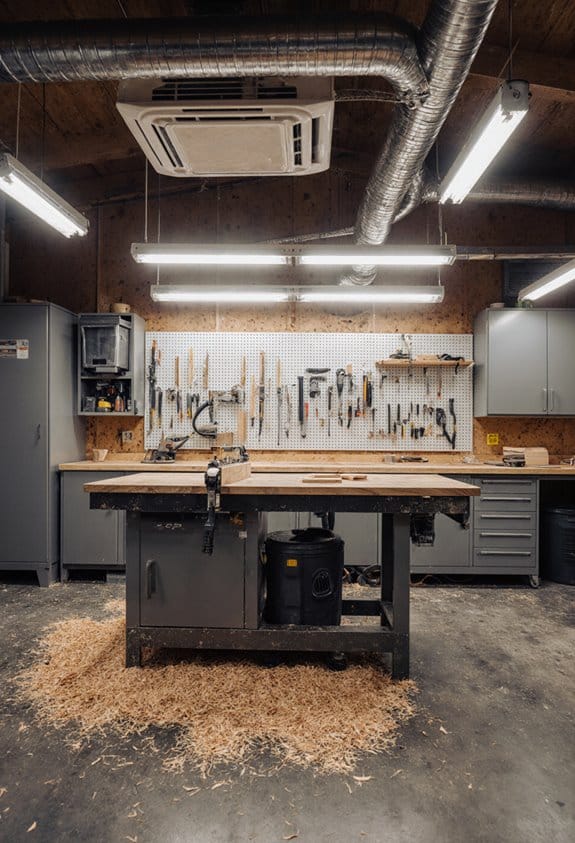
Energy Efficiency in Workshop Lighting Systems

Are you tired of high energy bills from your workshop lighting? It’s a common issue many of us face, but there’s a simple fix that can make a big difference.
Switching to LED lighting can cut your energy consumption by up to 80%. That’s right! LEDs use about 75% less energy than those outdated bulbs, and they last roughly 100,000 hours. Just think about how much you could save in the long run!
Improved visibility is another perk. When you’ve got the right lighting, it can really boost your productivity—up to 20%, in fact. Plus, adding smart control systems can help trim energy use by as much as 30%. So, why not make the switch?
Here’s the trick: evaluating your current lighting setup can pinpoint areas for improvement. Take a look around—how many lights are on when they’re not needed?
By adjusting your approach, you can save both energy and money, while also creating a safer work environment.
Honestly, optimizing your workshop lighting isn’t just about cutting costs. It’s also about enhancing your workspace for better performance.
Give it a try and watch how it transforms your work area. In summary, efficient lighting not only helps your budget but can also make your workshop a more productive space. What changes will you make today?
Key Takeaways
- Energy-efficient lighting, especially LEDs, can reduce energy consumption by up to 80% compared to traditional incandescent bulbs.
- Implementing smart control systems enhances energy efficiency by optimizing light usage based on occupancy and natural lighting conditions.
- High lumen output lights improve visibility, safety, and productivity, with potential efficiency gains of around 20%.
- Transitioning to energy-efficient lighting can lead to significant financial savings through lower electricity bills and reduced replacement costs.
- Using LEDs helps decrease greenhouse gas emissions and promotes a healthier environment due to their long lifespan and lack of harmful materials.
The Importance of Energy Efficiency in Workshop Lighting
Have you ever found yourself squinting in a dimly lit workshop, struggling to see what you’re working on? It’s frustrating, right? Energy efficiency in workshop lighting is more than just a trend; it’s crucial for both your safety and your wallet. By switching to energy-efficient lighting, specifically LED technology, you can cut energy usage by as much as 80% compared to those old incandescent bulbs. That’s a serious reduction in your electricity bill!
Better lighting is about more than saving money, though. Improved visibility directly impacts safety. When you can see clearly, you’re less likely to have accidents in the workspace. Plus, enhanced lighting also boosts productivity. Who hasn’t felt their eyes tire out after working under flickering bulbs? With the right color temperature and higher lumen outputs, you’ll find it easier to focus on your tasks without straining your eyes.
Here’s the trick: LEDs have a lifespan of roughly 100,000 hours! Think about that. Fewer replacements mean less hassle and lower maintenance costs over time. It’s a practical choice for anyone managing a workshop.
So, why does this matter? Well, choosing energy-efficient lighting isn’t just smart for you personally; it’s also good for our planet. By reducing your carbon footprint, you help align your practices with sustainable goals that benefit both current and future generations.
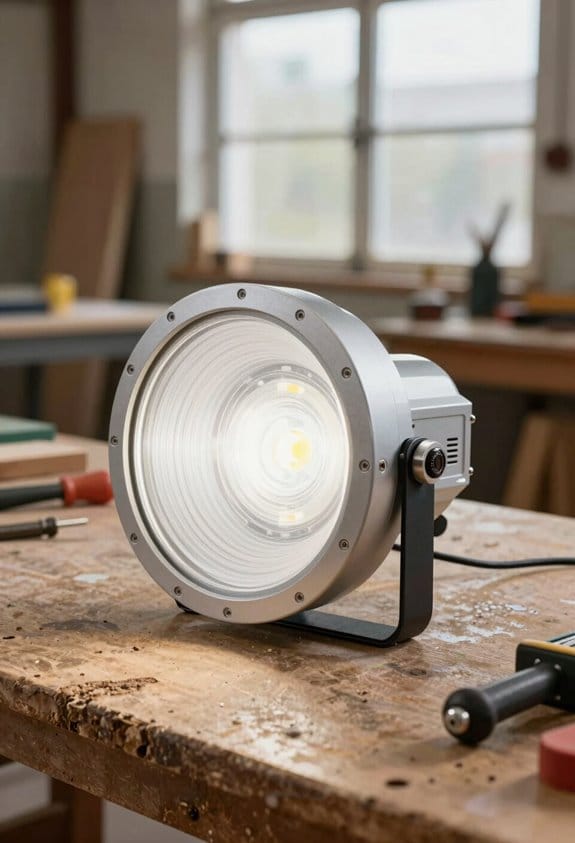
To wrap it all up, adopting energy-efficient lighting can transform your workspace. Better visibility, cost savings, and a reduced carbon footprint all play a part. Are you ready to make the switch? High lumen output models, such as the LED Shop Lights with Deformable Panels, offer up to 18,000 lumens, combining energy efficiency with superb brightness.
How to Cut Energy Consumption With LED Lighting
Are you tired of watching your energy bills climb higher every month? If you work in a workshop, switching to LED lighting could be one of the best decisions you make. Not only do LEDs use up to 75% less energy than those old-school incandescent and halogen bulbs, but they also bring down those pesky utility costs significantly.
What about lifespan? Well, these advanced bulbs can last anywhere from 40,000 to 100,000 hours—roughly 15 times longer than typical bulbs. This means fewer trips to the store for replacements and reduced maintenance issues. Plus, LEDs are designed to convert most energy into light, which means less wasted heat. This can cool down your workspace and help save even more on energy bills.
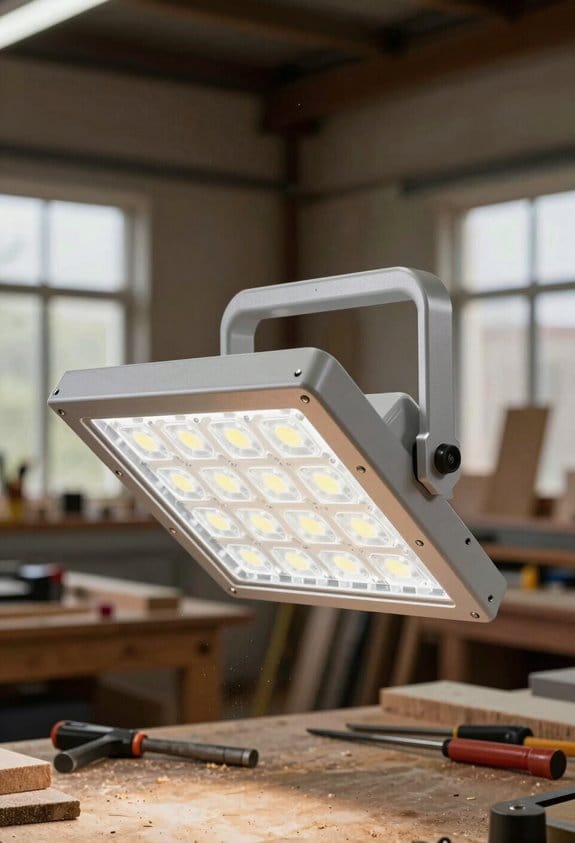
Many 8-foot LED shop lights also offer brightness levels ranging from 8,640 to 15,000 lumens, providing high brightness for workshops without increasing energy consumption.
So, why does this matter? By embracing energy-efficient LED commercial lighting, we could collectively save over $30 billion across the country. And let’s not forget the positive effects on the environment—we’d be cutting down on the carbon footprint tied to high energy consumption.
Frankly, it’s a no-brainer for workshops looking to save money and help the planet at the same time. Consider making the switch; not only will your wallet thank you, but you’ll also feel good about reducing energy waste. Are you ready to take that step?
Recommended Products

LSF8 SERIES of ASD LED STRIPLIGHT FIXTURE WITH EMERGENCY BATTERY BACK-UP & Q-BASE is the upgraded version of LSF7 LED Striplight by ASD. The light has a narrow, low-profile design. Durable commercial grade housing resistant to rust and impact along with an anti-glare PMMA lens provide many years of use. The fixture is designed to operate on 120-277V circuits with a 0-10V dimmable driver.

Adjustable Wattage: This LED high bay light have 80W(11200LM),100W(14000LM), 150W(21000LM),3 wattage selectable. No need to worry about what wattage to buy, Will not too bright or too dark due to fixed ceiling height. More flexible mounting heights from 8 feet to 20 feet

LSF5 SERIES. ASD LED STRIPLIGHT FIXTURE WITH BATTERY BACK-UP has a narrow, low-profile design. Durable commercial grade housing resistant to rust and impact along with an anti-glare PMMA lens provide many years of use. Design of the fixture allows to connect multiple fixtures together with connection bracket (ASIN B0D7MM6P9G, Sold Separately). It is designed to operate on 120-277V circuits with a 0-10V dimmable driver.
Essential Features of Energy-Efficient Workshop Lighting
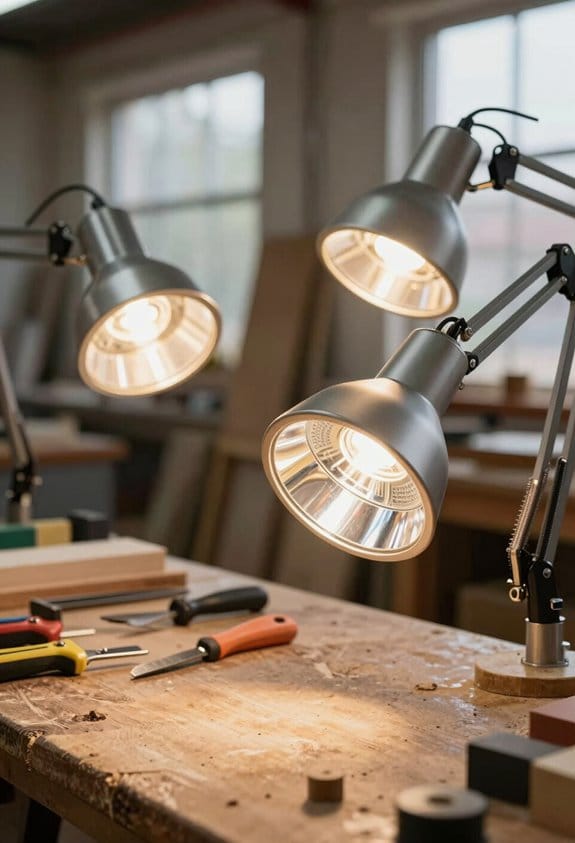
Have you ever walked into a workshop and felt like you were squinting just to see what you were working on? Lighting can make or break your workspace, and if you’re looking to boost both efficiency and energy savings, you’ll want to focus on a few key features.
First off, think about switching to LED lights. They can cut your energy use by 80% compared to the old-school fixtures. Not only does this save you money on your electric bill, but LEDs also last anywhere from 40,000 to 100,000 hours. That means fewer trips to buy replacement bulbs and less hassle with maintenance down the road. Who wouldn’t want that, right?
When it comes to lighting, visibility is crucial—especially if you’re doing detailed work. Make sure you’re getting high lumen output lights. It’s amazing how much easier it is to see what you’re working on when the lighting is up to par! And don’t forget about color temperature. Choosing cooler, neutral white light improves color accuracy, which can really make a difference in your work.
Also, here’s the trick: consider adding dimming capabilities and occupancy sensors. These features help save energy and can make your workshop more efficient. So, why does this matter? Because reducing energy consumption not only saves money but also contributes to a healthier environment.
Additionally, selecting fixtures with an energy efficiency rating above 100 lumens per watt ensures you are maximizing brightness while minimizing power consumption.
Recommended Products

+40% CENTRAL ILLUMINATION COVERAGE - The densely arranged multi-LED linear array in this LED linear high bay light forms a continuous light band, which eliminates the brightness gradients typical of point sources and increases the center light intensity uniformity by 43%. Through directed light distribution, the linear fixture precisely projects illumination onto work areas, avoiding the waste of light energy from scatter in non-operational zones.


Energy-Efficient Types of Workshop Lights
Have you ever found yourself squinting in a poorly lit workshop, wishing for better light without racking up your electric bill? Finding energy-efficient lighting can really change the game for your workspace, saving you money while creating a much nicer atmosphere to work in.
One of the best options out there is LED lights. They use a whopping 90% less energy than old incandescent bulbs and last about 15 times longer. That’s a huge win for your wallet! Plus, they give off a bright, clear light that can help you see even the tiniest details in your projects.
If you’ve got a larger workshop, don’t overlook fluorescent lights. They’re 3 to 5 times more efficient than incandescent lamps, which makes them a popular choice plenty of shops. They also have that nice, bright light that keeps you focused and productive.
For even more savings, consider compact fluorescent lamps or induction lamps. They’re not only efficient but can last over 100,000 hours—think of how much hassle that saves you from changing bulbs all the time! Frankly, with all these options, you can bring in great lighting quality while also making your workshop more sustainable.
Choosing lighting with high lumens per watt ensures you get the most light for the least energy used, making your workspace both bright and efficient.
Recommended Products

⭐ IP66 WATERPROOF & DUSTPROOF — COMMERCIAL GRADE DURABILITY Built for the harshest environments with IP66-rated waterproof and dustproof construction. Durable polycarbonate housing reinforced with stainless steel hardware stands up to moisture, dust, and debris in car washes, parking garages, barns, warehouses, food processing facilities, walk-in coolers, carports, gas stations, and wet outdoor applications.

Six premium airfoils built from aircraft-grade aluminum

✅ 4-Tier Wattage & 35% Energy Savings— With four selectable wattages (400W/320W/240W/100W), this single product line covers full-scenario heights from 10–60FT, eliminating the need for mixed-model purchases. The "one product replaces multiple solutions" design precisely matches wattage to installation height, slashing energy consumption by over 35% and reducing maintenance time by 40%—ideal for large factories, warehouses, and facilities with varying ceiling heights.
How Smart Control Systems Improve Workshop Lighting
Have you ever walked into a workshop and cringed at the poor lighting? It can make even the simplest tasks feel daunting. Improving workshop lighting isn’t just about swapping out those outdated bulbs for energy-efficient ones; there’s so much more you can do. Smart control systems can really amp up your lighting experience while saving you a chunk of change on energy bills.
Consider using occupancy sensors. These nifty devices make sure the lights are on only when someone’s in the room. You can actually cut energy use by up to 30%. Imagine not worrying about leaving the lights on when you step out for a quick break. Plus, with dimming options, you can adjust the brightness for whatever you’re working on. It’s not only about comfort; it also helps save an additional 20% to 50% on energy costs depending on how bright you need it.
Ever heard of daylight harvesting? It’s pretty neat. This technique adjusts your artificial lighting to work with natural light. So, when the sun’s shining in, your lights can dim down, saving you even more energy.
And don’t forget about scheduling. You can set up a system to turn off the lights when the shop’s closed. No more worries about accidentally leaving them on all night—trust me, it makes a difference.
The best part? Many of these smart systems let you control your workshop lighting right from your phone. You can manage everything remotely, boosting energy efficiency without even being there. So, why does this matter? Because it brings convenience to your day-to-day operations and helps keep costs down.
Choosing systems with smart charging technology ensures compatibility and efficient power management for all your connected devices.
Recommended Products

Sturdy Materials: Our soundproof pod features a high-quality 6063-T5 aerospace-grade aluminum alloy as the main frame, paired with 1.2mm thick cold-rolled steel plates. The surface is treated with an electrostatic powder coating process, which ensures strong adhesion, excellent corrosion resistance, and scratch resistance — keeping the pod looking like new even after long-term use.

SURFACE-MOUNT & CORNER PROTECTION; This AIKVSXER 1x4 LED flat panel light adopts surface-mount installation, no need for drywall cutting like flush mount recessed lights. Reinforced corners avoid damage during transport, ultra-thin design supports 120-277V wide voltage.

Multi-Textured Robust Windmill Fan: Classic Chalk White finish fan housing surrounded by (9) sleek Weathered Wood composite fan blades
How Proper Lighting Enhances Safety and Productivity
Have you ever noticed how a dimly lit office can make everything feel overwhelming? You’re not alone. A lot of folks overlook just how critical good lighting is in our work environments. Research consistently shows that getting that lighting right can not only keep you safe but also make you more productive.
For starters, think about this: better visibility can actually cut down on workplace accidents by over 40%. That’s a significant drop! With everything you juggle at work, the last thing you need is to worry about getting hurt simply because it’s too dark to see what you’re doing.
And let’s talk about the types of lights we use. Energy-efficient LED lights are a solid choice. They last way longer than those old-fashioned bulbs—like 15 times longer! Plus, they give off a brighter light that helps you see details better, which can help reduce eye strain. Just imagine wrapping up a long day without feeling like you’ve stared at a screen for ages.
Here’s a little something to keep in mind: adequate lighting can boost your efficiency by around 20%. This means you can get your work done quicker and with fewer mistakes. But wait, there’s more—good lighting designs can lift everyone’s mood. Happy employees often lead to a productivity boost of at least 10%. So, why does this matter? A well-lit workspace not only protects you but also creates a more positive atmosphere.
Investing in energy-efficient LED shop lights with long lifespans and high lumens can maximize both safety and cost savings.
If you’re thinking about upgrading your office lighting, it’s definitely worth the investment. You’re not just making the space safer; you’re also building an environment where people can thrive and feel good about their work.
In short, good lighting can change the way you function at work. Have you considered how your workplace lighting affects you?
The Environmental Benefits of Energy-Efficient Lighting
Have you ever thought about how much energy your lights are using and what that means for the environment? Honestly, switching to energy-efficient lighting can make a big difference—not just for your wallet, but for the planet too. Let’s break this down.
Energy-efficient lighting, especially LED lights, can cut down your energy use by as much as 80%. That’s not just a small saving; it can lead to huge reductions in greenhouse gas emissions from power plants. By choosing LEDs, you’re taking a step toward lowering your carbon footprint and moving away from fossil fuels. Have you considered how this change could help future generations?
Another great perk of LED lights is their lifespan. These bulbs last anywhere from 40,000 to 100,000 hours, which means you won’t be changing them out all the time. Fewer bulbs in the trash means less waste in landfills. Plus, LEDs don’t contain harmful materials like mercury, which means you’re also doing your part in keeping pollution levels down.
Frankly, making the switch isn’t just good for the environment; it can also save businesses over $30 billion by 2027 through energy savings. Imagine what you could do with that extra cash!
For example, choosing LED lighting with high lumens per watt ensures you get maximum brightness while minimizing energy consumption, optimizing both visibility and efficiency.
How to Choose the Best Workshop Lighting for Your Needs
How can you ensure that your workshop lighting checks both the practicality and energy efficiency boxes? First off, think about switching to LED lights. They use up to 75% less energy than those old-school bulbs and can shine for nearly 100,000 hours. That means you won’t be replacing them nearly as often, which is a big win for your wallet.
Now, moving on to brightness. It’s important to have adequate lumen outputs, especially if you’re doing detailed work. Too dim and you’ll strain your eyes; too bright and it’s uncomfortable. You want a balance that keeps your workspace lit just right.
Don’t forget about color temperature. Neutral white light is often the best choice because it improves color accuracy, crucial if your projects require precision. And let’s face it, nobody wants to mix up paint colors or measure materials incorrectly.
Durability matters, too. Your lights need to handle workshop grit—think dust, oils, and the occasional bump. It makes no sense to invest in lights only to have them fail at the first sign of a little wear and tear.
Finally, consider adjustable lighting options. Work lamps that let you dim the light can be especially helpful. This not only boosts safety but also helps save energy. You want a setup that matches your workflow, right?
In addition, selecting equipment with durable materials ensures longevity, just like heavy-duty designs improve the lifespan of commercial cleaning tools.
Recommended Products

1x4 LED Flat Panel Light Surface Mount: This 1x4 LED flat panel light delivers 5500 lumens with only 50W power, achieving over 110LM/W efficiency. Perfect replacement for fluorescent ceiling lights, saving up to 85% on energy costs.

High Brightness & Energy Efficiency: This 50W 1x4 led flat panel light offers 5500LM of brightness, ensuring excellent visibility while consuming significantly less energy than traditional fluorescent lights. It reduces carbon emissions and electricity costs by 85%.

50W 5500lm Hight Brightness - 1x4 LED Flat Panel Light Surface Mount: AIKVSXER Super Bright 1x4 Surface Mount LED Ceiling Light is designed with high-efficiency LED chips to replace traditional fluorescent light, high-efficiency (efficacy over 110LM/W) light source, reducing carbon emissions and your electric bill by 85%.
Implementing Energy-Efficient Workshop Lighting
Have you ever walked into a workshop that felt dim and uninviting? Lighting can make or break the vibe of any workspace. When it comes to lighting your workshop, energy efficiency is not just smart; it’s crucial for keeping those utility bills in check.
Switching to LED lights is one of the best decisions you can make. Honestly, these little bulbs can cut energy use by up to 75%! That’s a significant drop that adds up over time and helps your wallet. But don’t stop there—keeping those lights in good shape will require some upkeep. Regular maintenance like cleaning them and swapping out bulbs when they burn out can extend their lifespan, so don’t skip it.
Now, have you thought about smart lighting controls? Incorporating things like occupancy sensors or daylight harvesting makes a lot of sense. It means lights only come on when you actually need them—no more wasting energy for an empty room!
The best part is, LEDs run cooler than old-school bulbs, which means your cooling costs take a hit, too. A more comfortable workshop environment is a win-win. Plus, you’re doing your part for the planet by creating a more sustainable space. Consider using linkable LED shop lights to expand your lighting coverage efficiently while maintaining energy savings.
What Incentives Can Help You Upgrade to Energy-Efficient Lighting?
Upgrading to energy-efficient lighting in your workshop could do wonders, both for your workspace and your wallet. But let’s be real, making that switch can feel like a big investment at first. So, what’s in it for you when you decide to go for those shiny new LED lights?
First off, a lot of utility companies are ready to offer generous rebates—some can be as much as $249 per fixture when you install ENERGY STAR certified LED lighting. Yes, you read that right! This helps ease the financial burden right off the bat. On top of that, there are energy efficiency programs across the U.S. that support businesses transitioning to better lighting options, and you could end up saving a good chunk on your energy bills over time.
Then there are the tax credits and rebates that federal and state governments sometimes provide for such upgrades. These incentives can add up to real savings, making that shift to energy-efficient lighting even more appealing. Depending on where you’re located, you might also benefit from local regulations, like California’s Title 24, which can qualify you for additional financial perks.
So, why does this matter? It’s not just about the lighting; it’s about lowering your energy costs and potentially helping the environment. For instance, upgrading your workshop equipment alongside lighting, such as using energy-efficient dust extractors, can amplify these savings.
If you’re looking to cut down on that carbon footprint while boosting your bottom line, taking advantage of these options might be your best bet.
In short, transitioning to energy-efficient lighting can yield significant financial benefits and improve your workshop’s vibe. Have you looked into what kind of incentives your local utility offers? It’s worth checking out!
Frequently Asked Questions
What Initial Costs Should I Expect When Upgrading Lighting Systems?
When considering upgrades, we should anticipate initial investment analysis covering cost breakdown strategies. It’ll help to explore financing options, incentives, and rebates for long-term savings projections, ensuring a favorable return on investment with positive economic impacts.
How Long Do Energy-Efficient LEDS Typically Last?
When it comes to LEDs, their longevity expectations can leave us astounded! Typically, we’re looking at a lifespan of 15,000 to 50,000 hours. This durability boosts workshop productivity, reduces replacement frequency, and enhances energy savings markedly.
Can I Retrofit Existing Fixtures With Energy-Efficient Options?
Yes, we can retrofit existing fixtures with energy-efficient options. By analyzing fixture compatibility and bulb types, considering the installation process, we’ll maximize energy savings and performance benefits while enhancing user satisfaction and minimizing environmental impact.
Are There Maintenance Requirements for Energy-Efficient Lighting Systems?
Like tending a garden, our energy-efficient lighting systems need care. We’ve got maintenance schedules for bulb replacements, fixture cleaning, performance monitoring, energy audits, and safety inspections to guarantee compatibility and smooth system upgrades in an eco-friendly way.
How Do Energy-Efficient Lights Impact Color Accuracy in Workshop Settings?
Energy-efficient lights enhance color rendering and improve color perception, boosting workshop productivity. By delivering a balanced lighting spectrum, they help with task accuracy and provide visual comfort, all while offering significant energy savings and important design considerations in bulb comparison.


