As an Amazon Associate, we earn from qualifying purchases. Some links on this site are affiliate links at no extra cost to you. Our recommendations are based on thorough research and editorial judgment.


LED vs Fluorescent Shop Lighting: Technical Comparison

Have you ever walked into a shop and noticed how the lighting affects the whole vibe? If you’re in the market for new shop lighting, you might want to consider the differences between LED and fluorescent options. Trust me, it can make a big impact.
You may be interested


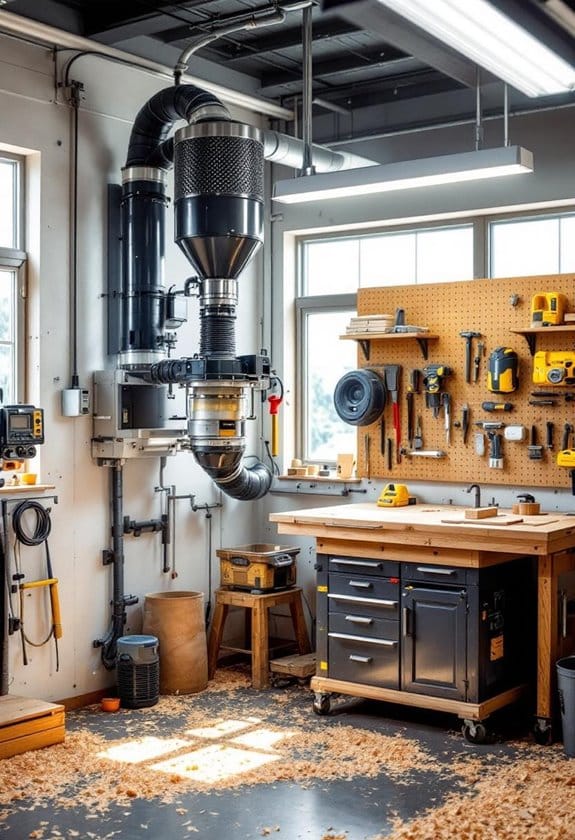
First off, LEDs are way more energy-efficient. They can use up to 75% less energy compared to fluorescent lights, pulling about 72 watts instead of the hefty 110 watts or more that fluorescents typically use. Think about your energy bill. Less energy consumption means lower costs, which is a win-win for your wallet and the environment.
Lifespan is another huge factor. While fluorescent lights typically last around 10,000 to 15,000 hours, LEDs can shine bright for about 50,000 hours. That’s a lot less time spent changing bulbs, and who wants to be up on a ladder every few months?
And let’s not forget about safety. LEDs don’t contain any hazardous materials like mercury, so they’re a safer option overall. Plus, they operate cooler than fluorescents, which means a more comfortable atmosphere in your workspace.
So, why does this matter? Not only can these lighting choices brighten up your shop, but they can also create a better working environment for you and your employees.
If you’re looking for a straightforward switch that can lead to significant savings, consider making the switch to LED.
In summary, switching to LED lighting can be a smart choice for both energy savings and longevity. Are you ready to take a closer look at your lighting options?
Key Takeaways
- LEDs are up to 75% more energy-efficient than fluorescent lights, resulting in lower electric bills and energy consumption.
- LED technology offers an impressive lifespan of approximately 50,000 hours, compared to 10,000-15,000 hours for fluorescents.
- LEDs emit light instantly at full brightness, while fluorescent lights take time to warm up, affecting usability.
- Dimmable LED options allow customizable lighting levels, enhancing versatility and energy savings in various activities.
- LEDs contain no hazardous materials like mercury, offering safer disposal and reducing environmental impact over fluorescents.
How LED Shop Lights Work: An Overview of Technology

When it comes to lighting up your shop, many folks are still stuck on traditional fluorescent bulbs. But have you ever wondered why LED shop lights might actually be a better choice?
First off, LEDs use semiconductors to create light, which means they’re usually more energy efficient and brighter than fluorescent lights. You’ll notice right away that LEDs send light out in a specific direction, reducing waste and maximizing lumens per watt. This is a big deal if you want to light up every corner of your workspace without wasting energy.
The lifespan of LEDs is pretty impressive, too. While fluorescent lights give you about 10,000 to 15,000 hours of light, LEDs can last up to 100,000 hours! Think about the savings and the hassle of constantly replacing bulbs. Plus, many LED fixtures can be dimmed to create just the right ambiance in your shop, so you’re in control.
And here’s something that often gets overlooked: LEDs light up instantly at full brightness. You won’t have to deal with those annoying flickers or the delays that often come with fluorescent bulbs—especially in colder temperatures. So, why does this matter? It means you’ll have reliable performance every time you flip that switch.
Additionally, LEDs provide an ideal color temperature ranging from 4000K to 6000K, delivering a daylight-like ambiance that enhances visibility and reduces eye strain.
In short, LED shop lights offer a lot of benefits over traditional options. If you’re considering a lighting upgrade, it may be time to make the switch and enjoy the long-lasting, efficient brightness that LEDs provide. What’s holding you back from giving them a try?
Recommended Products

✅【Increadible Brightness Like the Sun & No Flicker】- The 150W LED high bay light features 22,500 output lumens eyes friendly white lights with no glaring or flicker, high quality driver provides clear and soft light. 3 wattages selectable(150W&100W&90W), which can be adjusted according to the use environment. It is dimmable at 0-10V, any suitable brightness for your choice, offer awesome lighting experience and protect eyes. (Note: Dimmer switch not included.)
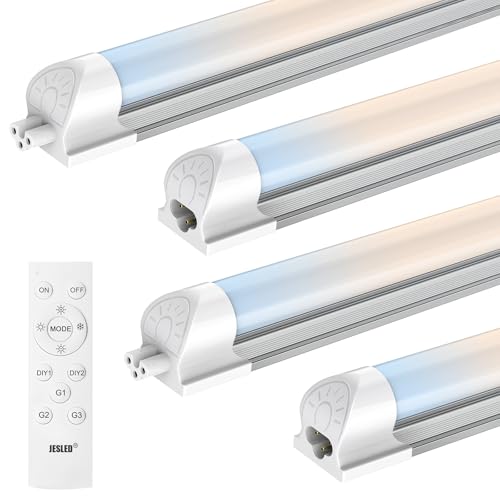
【Quick Pairing & Remote Control】Before first use, simply pair the remote with the 4FT led shop light. The FCC-certified remote provides stable control up to 20m (65ft), allowing you to easily adjust your LED shop lights dimmable without interfering with other electronic devices.
Exploring the Mechanics of Fluorescent Lighting

Have you ever wondered how fluorescent lights work? It’s pretty interesting, but also a bit complex. Essentially, these lights function by sending an electric current through low-pressure mercury vapor inside a glass tube. This generates ultraviolet light, which then interacts with a phosphor coating on the inside of the tube, making visible light.
Here’s the thing about fluorescent lights: they need something called a ballast to control the current. This can complicate things when you’re installing them or dealing with maintenance. And if you notice that your fluorescent bulbs aren’t bright right away, don’t worry! They often take a few moments to reach their full brightness. Truth is, their lifespan averages between 10,000 and 15,000 hours. That means you might be swapping them out more often than you’d like, especially when compared to LEDs, which can last over 50,000 hours. Unlike fluorescents, many LED lights also feature plug-and-play installation for easier setup and maintenance.
Recommended Products
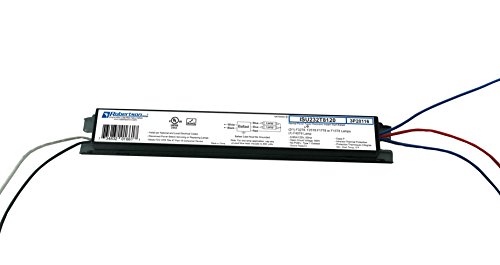
FEATURES: Engineered to operate 1 or 2 T8 fluorescent lamps—including F32T8, F25T8, F17T8, and F40T8. Its parallel lamp connection offers better performance with mismatched lamps and independent lamp operation. Perfect for retrofits or replacements. This lamp ballast delivers instant start technology that ensures fast lamp ignition and energy savings. Compact and lightweight, it features standardized mounting dimensions and pre-wired leads for quick and easy installation.
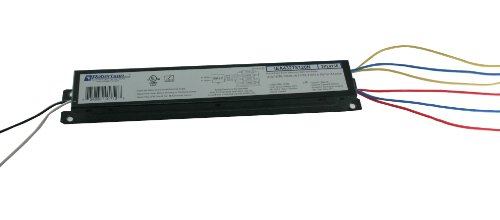
FEATURES: Engineered to operate 3 or 4 T8 fluorescent lamps—including F32T8, F25T8, F17T8, and F40T8. Its parallel lamp connection offers better performance with mismatched lamps and independent lamp operation. Perfect for retrofits or replacements. This lamp ballast delivers instant start technology that ensures fast lamp ignition and energy savings. Compact and lightweight, it features standardized mounting dimensions and pre-wired leads for quick and easy installation.

Philips Advance RELB-2S40-N Electronic Ballast, T12 Lamps, 120V Lighting, 1 Count (Pack of 1), Black
electric-household-fan-replacement-parts
Energy Efficiency: LEDs vs. Fluorescents

Have you ever looked at your electricity bill and thought about how lighting costs add up? Energy-efficient lighting isn’t just about saving a few bucks; it’s about making a smart choice for your wallet and the environment. When it comes to choosing between LED and fluorescent lights, the benefits of LED lights stand out.
First off, consider how much energy each type uses. LEDs use up to 75% less energy than fluorescent lights, which can lead to serious savings over time. For instance, a typical LED shop light consumes about 72 watts, while you’re looking at 110 watts or more for fluorescent systems. That’s a huge difference. Plus, LEDs produce at least 25% more light per watt, which can really boost productivity.
You might think that replacing all your bulbs with LEDs could cost a lot initially, but here’s the trick: their lifespan is around 50,000 hours. Compare that to fluorescent bulbs, which usually last only 10,000 to 15,000 hours. That means fewer trips to buy replacements and less money spent on maintenance. Long story short, the initial investment in LEDs can pay off pretty quickly, especially if you’re in a commercial space.
So, why does this matter? Well, if you care about reducing your energy bills and being kinder to the planet, switching to LED lighting can be a smart move. Honestly, it’s a win-win situation for both your finances and the environment. Many LED shop lights also offer plug-and-play installation, making the upgrade process quick and hassle-free.
Recommended Products

Super brightness: 6500K cool daylight white, 4400 lumens of brightness—brighter than 5000K. These 4ft led shop lights only consume 40W while providing the bright illumination with 250W (6 times more than conventional fluorescent lights). It is an amazing LED performance of 110 lm/w, which can save you money on electricity. The clear, comfortable 6500K light is easy on the eyes, so you can work for hours without eye strain.

Super brightness: With 4400 lumens brightness at 6500K cool daylight white, these 4ft led shop lights only consume 40W while provide the bright illumination with 250W (6 times more than conventional fluorescent lights). It is an amazing LED Efficiency of 110 lm/w, which can save the electricity expense for you.

【Ultra Bright LED Garage Light】POLARPRA 160W LED garage light comes with 312PCS top quality LED diodes with new designed as 6+1 panels ultra-bright adjustable LED panels support 16000 lumens, CRI80+, 6500K daylight natural light. Turn a dark garage into noon-time sunny with no dark spaces, flicker or glare.
Lifespan Comparisons: Which Lighting Lasts Longer?
When it comes to shop lighting, one of the biggest concerns is how long those bulbs will actually last. You probably don’t want to be changing lights every few months, right? That’s where LED lights really shine—pun intended! They can last around 50,000 hours, which is a whole lot more than fluorescent lights that usually clock in at about 10,000 to 15,000 hours.
The best part is that even after those 50,000 hours, LEDs still give you about 70% of their original light output. Isn’t that impressive? On the flip side, fluorescent bulbs tend to dim pretty quickly, which can leave you in the dark—literally.
Plus, LED technology is built to last. They’re made from sturdy materials, making them more robust than the fragile fluorescent tubes we’re all familiar with. This durability is a major advantage when you think about the hassle of replacements and maintenance. With LEDs, you’ll spend less time swapping out bulbs and more time focusing on what really matters in your space.
So, why does this matter? Well, fewer replacements mean lower maintenance costs over time, putting more money back in your pocket. Honestly, that makes LEDs a smart choice for lighting. Additionally, their energy efficiency rating helps save a significant amount on electricity bills, contributing to long-term cost savings.
Recommended Products
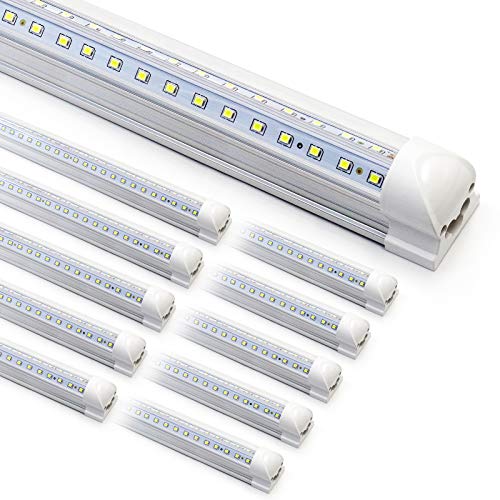
【Easy Installation and Linkable】- The 8FT led shop lights could plug and play. Sufficient screws, mount clips, etc. Installation accessories will help you to install quickly and easily. and the 8FT led Shop Light Fixture can be connected up to one by one with seamless connectors or connector wire. (Please connect no more than 4 pieces in series)

✅Super Bright Output: This 4FT LED shop light delivers 4400 lumens of bright 5000K Daylight White at only 42W power draw, reaching 105 LM/W high luminous efficiency. An ideal replacement for traditional fluorescent fixtures, it significantly reduces daily power consumption.
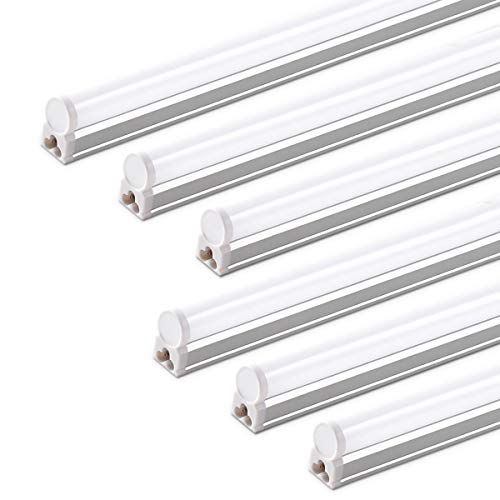
Super Bright: More than 2200 lumens output, 20w low power consumption. Please note that we have a brand new upgrade. If you need to connect new and old products, make sure to use the new male-female connector cables. The second generation is designed to be safer, preventing accidental electrical connections caused by human error
Safety and Environmental Effects of LED vs. Fluorescent Lighting
Have you ever walked into a shop and felt like the lighting was giving you a headache? That flicker from fluorescent lights can really strain your eyes. If you’re looking for a safer and more comfortable lighting option for your space, consider switching to LED lights.
One of the biggest perks of LEDs is that they don’t contain hazardous materials like mercury. That makes disposal much easier without the worry of environmental and health risks that come with fluorescent lights. You won’t have to jump through hoops for special handling procedures. Plus, LEDs stay cooler than fluorescents, which means less chance of fire hazards in your shop.
So, why does this matter? It’s not just about safety. The flicker from fluorescent bulbs can also affect your visual comfort. With LEDs, you get consistent, flicker-free light, making it easier on your eyes during those long work hours. And here’s the kicker: LEDs can last up to 50,000 hours, while fluorescents typically last between 10,000 and 15,000 hours. That’s a big difference when it comes to waste and maintenance costs.
Many professionals emphasize the importance of precision and consistency in their work environment, which LED lighting helps maintain.
The best part is, using LEDs contributes to lower carbon lighting solutions. You’re not just making a choice for your shop; you’re making a choice for the planet too.
In the end, making the switch to LED lighting can create a more inviting and safer atmosphere in your shop. Why not give it a try? What lighting choice has made the biggest difference for your space?
Choosing the Right LED Shop Lights for Your Workspace
Have you ever walked into a workspace and thought it felt a little dim or uninviting? Choosing the right LED shop lights can really transform how your space looks and feels. One major perk of these lights is their energy efficiency; they use about 75% less energy than those old fluorescent bulbs. That’ll help keep your electric bill down over time, which is always a win in my book. Plus, with a lifespan that can stretch up to 50,000 hours, you’ll find you’re replacing them far less often compared to the typical 10,000 to 15,000 hours you get from fluorescents.
When you’re on the hunt for LED shop lights, pay attention to the Color Rendering Index (CRI). Aim for lights with a CRI between 65 and 95. Why? Because higher CRI means better light quality and more accurate colors, which can be super helpful for tasks that demand attention to detail. And if you like having options, look for dimmable lights. This feature can really come in handy when you need different levels of brightness for various activities.
Here’s the trick: If you want an easy installation, consider going for Type A LED tubes. These provide a simple plug-and-play setup, making it a breeze to swap out your old lights for the new ones. You don’t want to deal with complicated installations when you could be enjoying your brighter, more efficient workspace right away. For the best overall work environment, also consider combining your lighting upgrade with a mobile dust collector to keep your space clean and safe.
Frequently Asked Questions
Are Shop Lights LED or Fluorescent Lights Better?
We believe LED shop lights are better due to their energy efficiency, longer lifespan, and superior light quality. Though the initial investment is higher, they reduce maintenance needs and environmental impact, making them worth it.
What Is Equivalent to 60W in LED?
In the world of lighting, we find that an 8-10W LED is equivalent to a 60W incandescent. Its energy savings and versatility in color temperature and lifespan make it a wise choice for us.
What Type of Lighting Is Best for a Shop?
For shop lighting options, we should consider energy efficiency comparison, installation costs, and brightness levels. LED lights offer durability, lower maintenance, and better color temperature effects, reducing environmental impact and heat output in various usage scenarios.
What Is a 40 Watt Fluorescent Bulb Equivalent to LED?
Fluorescent bulbs fall short; they’re roughly 40 watts compared to LED alternatives around 13-15 watts. Enjoy energy savings and lifespan expectancy with greater light output, fixture compatibility, and cost effectiveness—while positively impacting the environment!


