As an Amazon Associate, we earn from qualifying purchases. Some links on this site are affiliate links at no extra cost to you. Our recommendations are based on thorough research and editorial judgment.


Extension Cord Gauge Selection for Power Tools

When you’re gearing up for a project with power tools, you might not realize how crucial it is to pick the right extension cord. Have you ever plugged in a tool only to find it doesn’t get enough power? That’s where the gauge and amperage come into play.
For most tools that pull up to 15 amps, you’re good to go with a 14-gauge extension cord. But if you’re using heavier tools that draw between 15 and 20 amps, you’ll want to step it up to a 12-gauge cord. It’s not just about the number, though. The longer the cord, the more you risk losing voltage, which can mess with your tool’s performance.
Try this: always match the cord’s length to its gauge and check it against your tool’s wattage rating. No one wants to deal with tripped breakers or overheating cords!
Honestly, safety should always be a priority. So, checking that your extension cord is rated for what you’re using will go a long way in preventing headaches down the road.
In summary, don’t underestimate the extension cord’s role in your projects.
Next time you’re planning to plug in, think through these tips to keep everything running smoothly. What other tools are you excited to power up?
Key Takeaways
- Select a 14-gauge cord for tools drawing up to 15 amps and a 12-gauge cord for those between 15 to 20 amps.
- Longer extension cords require thicker gauges to minimize voltage drop and maintain tool performance; use a 12-gauge for runs over 50 feet.
- Always choose cords rated for the total wattage of your tools, using UL or ETL certification labels for safety compliance.
- For outdoor use, select cords with a gauge suitable for high amperage and moisture protection, typically ranging from 16 to 10 AWG.
- Regularly inspect cords for fraying or damage, and avoid exceeding 80% of the cord’s rated capacity to prevent overheating.
Understanding Extension Cord Gauges for Power Tools

Got a power tool that needs an extension cord? You might not realize it, but the gauge of that cord is pretty crucial. It’s not just about making sure it plugs in—it’s about getting the best performance without risking your safety.
The gauge tells you how thick the wire is and, generally, the lower the number, the thicker the wire. For instance, a 14-gauge cord can handle up to 15 amps, which is great for your everyday tools like drills and sanders. But if you’ve got heavier equipment, like a table saw, you really want to step up to a 12-gauge cord, which can support 15 to 20 amps. So, what do you need your cord for?
Here’s the trick: always choose a cord that meets or exceeds the power needs of your tools. Using a cord that’s too thin can cause overheating. You don’t want to deal with fire hazards while you’re trying to finish a project.
Additionally, longer cords require thicker gauges to maintain proper current flow and prevent voltage drops that could impact tool performance.
In short, picking the right extension cord makes all the difference. So, next time you’re reaching for that cord, think about what you need it for. Is it going to be up to the task?
Why Amperage Matters for Tool Efficiency
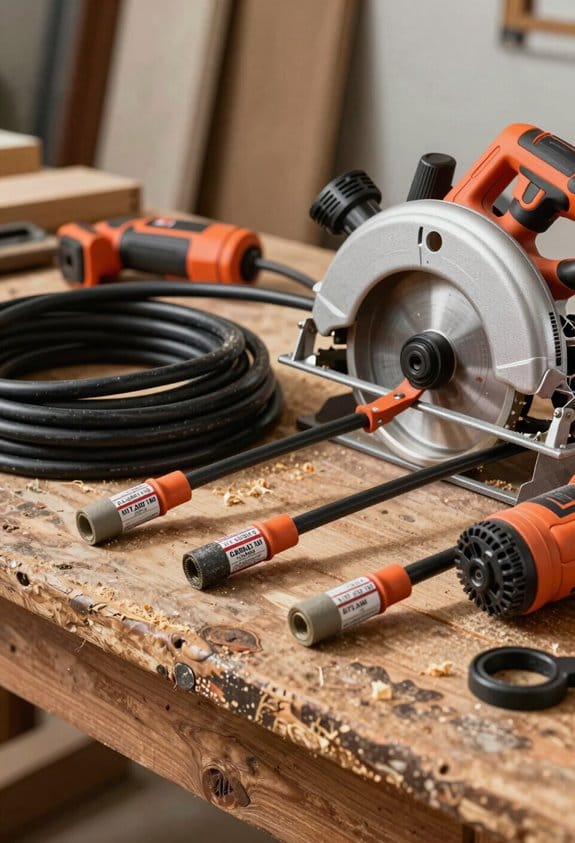
Understanding why amperage matters for tool efficiency can make a big difference for anyone looking to maximize their power tools’ performance. Ever wonder why your tools aren’t working as well as you’d hoped? Well, it often comes down to the amperage they require to run effectively. Most tools pull anywhere from 6 to 20 amps. If you’re using a lower gauge cord than recommended, you’re risking a voltage drop—which can lead to overheating and potentially damage your tools.
Try this: if you’re working with devices that draw up to 15 amps, a 14-gauge cord is your best bet. For heavier-duty tools that can pull up to 20 amps, bump up to a 12-gauge cord. And if you’ve got a longer extension run or are dealing with higher amperage tools, a thicker 10-gauge cord will really do the trick in ensuring efficiency and safety.
So, why does this matter? Honestly, matching your extension cord‘s amp rating with your tool’s amperage can prevent overheating. This simple step not only keeps your tools humming along but also extends the lifespan of both your tools and your cords. You don’t want to invest in quality tools only to have them underperform because of something as simple as an extension cord.
In short, pay attention to amperage! It’s a small detail that can lead to big gains in your tool efficiency. Are you ready to give your power tools the setup they deserve?
Keep in mind that using cords with pure copper conductors can enhance electrical performance and reduce heat buildup, making your setup safer and more reliable.
How to Ensure Your Extension Cord Matches Your Tool’s Wattage Requirements?

How can you ensure your extension cords match the wattage requirements of your tools? It’s easier than you might think. Start by figuring out the total wattage your tool needs. You can do this by taking the voltage—typically 120 volts—and multiplying it by the amperage rating you’ll find on your tool’s label.
For instance, if your tool draws up to 15 amps, that’s about 1,875 watts. In this case, you should go for a 14-gauge extension cord. If your tool needs between 15 to 20 amps, which translates to up to 2,400 watts, a 12-gauge cord is the safer bet. This little step can go a long way in avoiding overheating or even worse, fire hazards.
Now, you might wonder, “Why does this matter?” Well, if you’re using a cord that’s not rated for the tool’s wattage, you could run into some serious safety issues. After you’ve picked out the right cord, make sure to check for certification labels like UL or ETL. These indicate compliance with safety standards, and that’s especially important when you’re dealing with higher power or using your cords over longer distances, as those can require thicker wire to prevent annoying voltage drops.
Remember also to consider temperature resistance ratings when selecting your extension cord, as this ensures safe and reliable use under varying environmental conditions.
To sum it up, matching the wattage requirements of your tools with the right extension cord is not just smart; it’s also vital for your safety. So, next time you’re setting up your tools, take a moment to double-check those numbers. It could save you a headache down the road! What precautions do you take to stay safe while working with power tools?
How Cord Length Affects Performance
Have you ever plugged in your power tools only to find they’re not performing quite right? It might not be the tool itself but the extension cord you’re using. Sure, we often debate over what gauge to go for, but the length of that cord can be a game-changer for how your tools function.
As the cord gets longer, you start noticing a bigger voltage drop. What does that mean for you? Basically, your tools won’t get all the power they need. For example, if you hook up a 14-gauge cord that stretches over 100 feet, you could be looking at a voltage drop of about 2% for every 100 feet. That could leave your tools struggling to get the juice they require, meaning they won’t work as efficiently or effectively.
So, what’s the best move? If you’re running tools that pull 15 amps or more, pair them with a 12-gauge cord, especially if it’s longer than 100 feet. It makes a big difference. Think of it this way: the right cord length and gauge not only helps improve performance but can also reduce wear and tear on your equipment.
Additionally, maintaining a clean workshop environment with adequate dust collection can also contribute to safer and more efficient tool operation.
Truth is, choosing the right extension cord is important, so don’t overlook it. Are you ready to give your tools the power they need?
Choosing Between Indoor and Outdoor Extension Cords
Picking the right extension cord can be a bit of a headache, right? You want to make sure your tools work well and that you’re safe while using them. When you’re indoors, it’s usually best to go with lighter gauge extension cords, like 18 to 14 AWG. They’re perfect for low to medium-duty appliances and easy to handle.
Outdoors, though, it’s a whole different ball game. You’ll need outdoor extension cords that are tougher and thicker, often in the range of 16 to 10 AWG. They’re built to manage high amperage and can stand up to moisture and UV rays. And don’t forget about waterproof connectors! They play a crucial role in protecting your equipment from the elements.
Here’s a handy tip: indoor cords shouldn’t exceed 25 feet in length for the best performance. But for outdoor projects, you can get away with cords up to 100 feet, depending on the gauge you go with. So, why does this matter? Well, the right extension cord not only keeps your tools running smoothly but also helps prevent accidents. Using compatible fittings like air quick connect fittings can further ensure a secure and efficient connection in pneumatic tools.
In short, always choose the right cord for the job, whether indoors or outdoors. It makes all the difference. Got any extension cord stories to share? I’m all ears!
Essential Features of 14-Gauge vs. 12-Gauge Extension Cords
Have you ever found yourself wondering which extension cord to use for your tools? Choosing between a 14-gauge and a 12-gauge can be confusing, but it’s an important decision that impacts how well your tools perform.
Let’s break it down. The 14-gauge cord is rated for 15 amps and is great for lighter-duty jobs. If your tools are using around 5 to 10 amps, this cord will handle them just fine. It’s typically good for things like small drills or appliances, where you don’t need a ton of power.
On the other hand, if you’re working with heavier-duty tools, then a 12-gauge cord is where it’s at. This type can manage between 15 to 20 amps, making it suitable for power-hungry devices like table saws and welders. The 12-gauge can handle up to 2,400 watts, which gives you more flexibility with what you can connect. It also does a better job of maintaining voltage over long distances—especially useful if you’re running a cord longer than 50 feet. The thicker insulation means it can stand up to tougher conditions, which is really a plus if you’re using it in a workshop or outdoors.
So, why does this matter? If you pick the wrong cord, you might run into issues like overheating or not getting enough power to your tools. Nobody wants that frustration when you’re in the middle of a project, right?
Additionally, paying attention to the voltage and amperage ratings ensures safety and optimal tool performance when selecting an extension cord.
What You Need to Know About Extension Cord Safety
Have you ever plugged in an extension cord only to feel a bit uneasy about whether it’s safe? That uneasy feeling isn’t unwarranted. I’ve seen how one little mistake can lead to big problems, especially when it comes to power tools.
Choosing the right extension cord is way more important than most people think. If you’re using high-power tools that pull 15-20 amps, you definitely don’t want to skimp on this. Using a cord that can’t handle that kind of load can lead to overheating, and nobody wants a fire on their hands. Aim for 14-gauge cords for your light to medium-duty jobs, but if you’re tackling something heavier or using it over a long distance, shift up to a 12-gauge.
Here’s the trick: don’t exceed 80% of the cord’s rated capacity if you’re planning to run it for a while. It’s also a good habit to check your cords regularly for any signs of damage or fraying. A quick inspection could save you a lot of headaches down the road.
And just a quick heads-up, if you’re using cords outside, make sure they’re rated for outdoor use—especially when it’s wet out. That simple choice can really minimize electrical risks. Additionally, knowing the amperage ratings of your cord helps prevent overloading and ensures safe operation.
Practical Tips for Safe Extension Cord Use
Have you ever found yourself tangled in extension cords while trying to power up your tools? It’s easy to overlook safety when you’re in the thick of a project, but a few simple tips can help you stay safe and get the job done right.
First off, think about the gauge of your extension cord. If you’re running tools that draw between 15-20 amps, go for a 12-gauge cord. It’ll handle the load without overheating. And don’t forget about cord length! If you need more than 50 feet, opt for a thicker cable, like a 10 or 12 gauge, to avoid that pesky voltage drop.
Also, give your cords a regular once-over. Check for frayed cables or burnt connectors. Trust me, ignoring those signs can lead to serious fire hazards, and you definitely don’t want that. It’s a quick check that could save you a lot of trouble later.
Now, if you plan to plug in multiple devices, here’s the trick: add up their amp ratings. Make sure their total doesn’t exceed 80% of what the cord can handle. Overloading a cord can cause it to overheat, which is a fire risk. Nobody wants that!
For woodworking setups, consider using a dust collection bag to keep your workspace clean and reduce airborne particles.
Frequently Asked Questions
Is a 14 Gauge Extension Cord Good for Power Tools?
A 14-gauge extension cord’s great for many power tools, but let’s prioritize safety measures. We should consider cord length and tool compatibility to avoid overheating and guarantee peak performance during our projects.
Which Is Better, a 12 Gauge or 14 Gauge Extension Cord?
We’d say a 12-gauge extension cord is better for extension cord performance and power tools compatibility, especially for high-demand applications. It enhances electrical safety considerations, minimizing risks while maximizing efficiency during our projects.
How to Determine What Gauge Extension Cord You Need?
To determine the right gauge, we’ll consider extension cord lengths and choose based on voltage drop and safety ratings. For longer runs or higher amperage, thicker cords guarantee performance and reduce any overheating risks while operating safely.
Which Is Better, a 16 Gauge or 14 Gauge Extension Cord?
We believe a 14-gauge extension cord’s advantages outweigh a 16-gauge one, especially for meeting power needs with high-demand tools. Its better compatibility guarantees safer and more efficient performance for your projects.


