As an Amazon Associate, we earn from qualifying purchases. Some links on this site are affiliate links at no extra cost to you. Our recommendations are based on thorough research and editorial judgment.


How GFCI Protection Works in Workshop Environments

Have you ever thought about how often we expose ourselves to electrical hazards while working in our workshops? GFCI protection is one way to keep things safe. These devices sense electrical current imbalances as small as 5 milliamps and can trip the circuit in a flash, literally within milliseconds. This capability is crucial, especially near water sources where the risk of electric shocks increases.
To stay safe, it’s a good idea to install GFCI outlets close to any water areas, like sinks or hoses. Aim for them to be about 5 to 6 feet above the ground.
And don’t forget to check your GFCIs monthly! Just press the “test” and “reset” buttons to ensure they’re working correctly.
So, why does this matter? Having GFCIs in place means you can work with peace of mind, knowing you’re taking steps to protect yourself from shocks. For those looking to boost safety even further, let’s dive into some helpful installation guidelines.
If you’re unsure where to start, consider these tips:
- Choose GFCI outlets for locations like bathrooms, kitchens, and outdoor areas.
- Make sure to follow the manufacturer’s instructions during installation.
- If you’re not comfortable doing the electrical work yourself, don’t hesitate to call a professional.
Truth is, investing in GFCI protection isn’t just about following the rules; it’s about keeping you safe while you get creative in your workshop.
Whether you’re woodworking or tinkering with electronics, you’ll want to be focused on your project, not worrying about safety hazards.
In short, take the steps to protect yourself with GFCIs. Are you going to check those outlets today?
Key Takeaways
- GFCI protection continuously monitors electrical current between hot and neutral wires, quickly cutting off power when it detects imbalances as low as 5 milliamps.
- Essential for workshops, GFCI outlets reduce the risk of electric shock, especially when using tools in moist conditions.
- Compliance with the National Electrical Code ensures GFCI installation in areas prone to water exposure, such as near sinks and outdoor outlets.
- Regular monthly testing of GFCI devices is crucial; a non-tripping device indicates it may need replacement to ensure safety.
- Enhancing workshop safety includes integrating GFCI devices with equipment and consistent monitoring of the electrical system to prevent hazards.
What Is GFCI Protection and Why Is It Essential in Workshops?
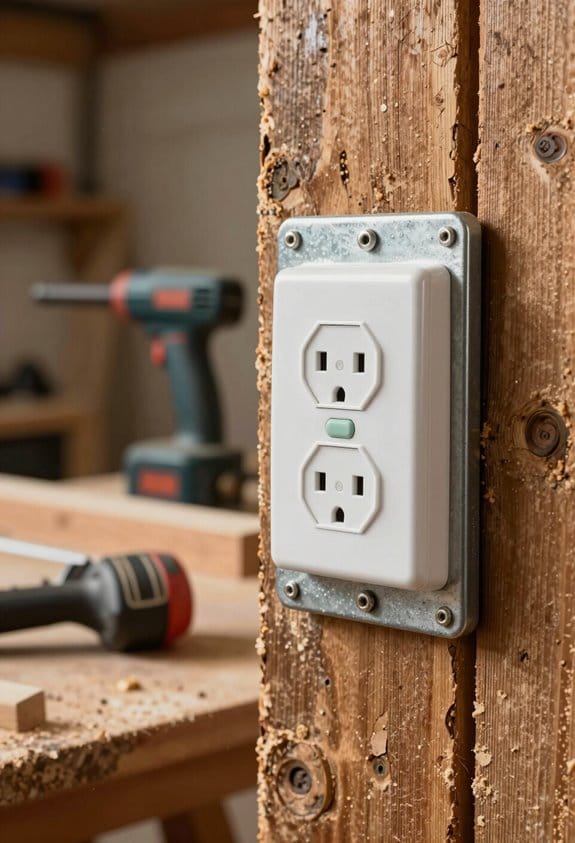
Ever found yourself knee-deep in a workshop project, only to suddenly think about safety? It’s easy to overlook, but knowing about GFCI protection can mean the difference between a safe workspace and a shocking encounter. A Ground Fault Circuit Interrupter (GFCI) is a device that cuts off power when it senses an electrical current imbalance, often at just 5 milliamps.
Think about the tools you might be using—many generate moisture, whether it’s a power washer or even just a sander collecting dust. That’s why GFCI outlets are essential, especially in areas where water might be present. The National Electrical Code (NEC) requires these, and it makes total sense. Regularly testing and maintaining your GFCI devices—aim for once a month—ensures they’re working properly when you need them most.
So, what’s the takeaway here? By adding GFCI protection to your outdoor outlets, you’re not just following codes; you’re taking a proactive step to reduce the risk of electrical accidents. Safety should always come first in the workshop, and GFCI outlets help keep you and your projects safe. Additionally, integrating workbenches featuring power outlet accessibility can further enhance safety and convenience by providing close and reliable power sources.
Have you checked your GFCI outlets lately? It’s a quick task that can add a level of safety that’s definitely worth it.
How Does a GFCI Work to Prevent Electrical Shocks?
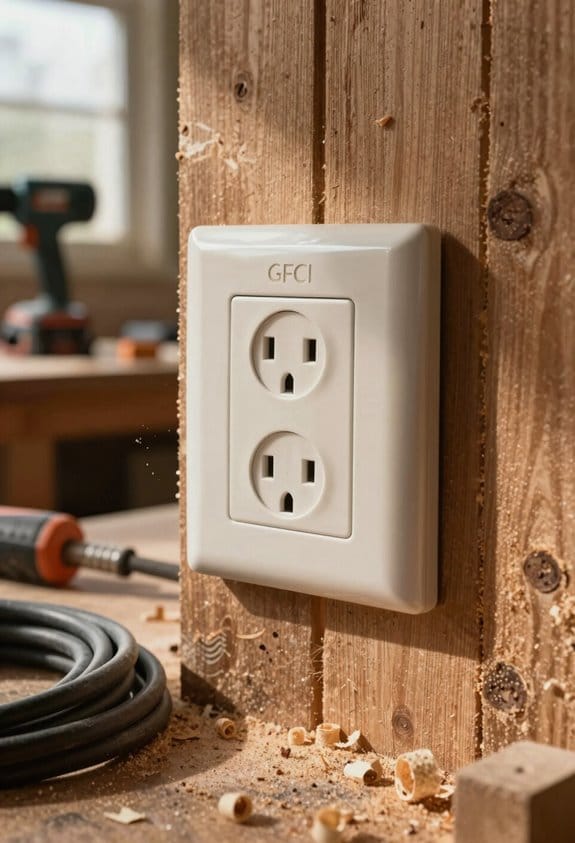
Ever been shocked while working on a project in your workshop? It’s a scary experience, and we want to avoid it at all costs. That’s where a Ground Fault Circuit Interrupter, or GFCI, comes into play. Understanding how this little device works can make a big difference in keeping you safe.
A GFCI works by constantly checking the electricity flowing in and out of your circuits. It compares the current between the hot wire and the neutral wire. If it notices any difference, even as small as 5 milliamps—which could mean there’s a ground fault—it trips the circuit in milliseconds. This quick action can be a lifesaver, especially in areas where moisture is common.
So, why does this matter? Well, in workshops, water and electricity can be a dangerous mix. That’s why it’s crucial to regularly test your GFCI devices. Just press the test button; it’s that simple. If it doesn’t trip, it’s a sign you need to replace it immediately. Keeping your GFCI in good working order is key to staying safe when using power tools.
The best part is that these devices are easy to install and maintain. Just make it a part of your regular safety checks. Safety doesn’t have to be complicated. Additionally, consistent maintenance, much like the upkeep required for precision woodworking tools, ensures reliable performance and longevity of your safety equipment.
Key Benefits of Installing GFCI Devices in Workshop Environments

Have you ever worried about electrical safety in your workshop? Installing GFCI devices is a smart way to tackle that concern. These outlets are designed to protect you by detecting ground faults and cutting off the power quicker than you can blink. This is especially important when working around water, where the risk of electric shock skyrockets.
Not only do GFCI outlets keep you safe, but they also help you stay compliant with electrical codes. That means you can work with peace of mind, knowing you’ve done your part to create a secure workspace. Plus, making these upgrades can even bump up your property value down the line.
Keep in mind, regular testing and maintenance are key. Make it a habit to check your GFCI devices to ensure they’re functioning properly. Trust me; operating equipment safely means fewer disruptions and lower chances of costly accidents. For added protection, consider GFCI power strips with surge protection ratings to guard your devices from voltage spikes.
Best Spots to Place GFCI Devices for Safety
How safe is your workshop when it comes to electricity? If you’re like many DIYers or hobbyists, the last thing you want is an electric shock from a misplaced plug. That’s where GFCI devices come into play, and placing them in the right spots can make all the difference.
First off, it’s essential to have GFCI protection at every 120-volt electrical outlet, especially those near sinks or water sources. Why’s that important? Well, those areas are likely to get wet, and moisture and electricity just don’t mix. Being smart about placement here can really reduce the risk of accidents.
You’re also going to want GFCI devices on dedicated circuits for any high-powered equipment you use. When you’ve got power tools running, the risk of ground faults goes up. Placing GFCI outlets in these situations keeps you safer during those intense projects.
Let’s not forget about outdoor workshops or any outlets exposed to the elements. Rain can sneak up on you, and an unprotected outlet outside can be a real danger. Ensuring those outlets are GFCI protected means fewer worries when the weather turns.
And what about garages or crawl spaces? These aren’t just cluttered areas; they can also harbor moisture, which makes GFCI outlets vital for safety. It’s a straightforward aspect that stops mishaps before they can even happen.
If you’re unsure about how to set these up, consulting a licensed electrician is a great move. They can help ensure you comply with the National Electric Code, and really, who doesn’t want peace of mind while working on projects? Think about it: a few smart upgrades can mean the difference between a safe workspace and a dangerous one.
In the end, paying attention to where you place your GFCI devices can save you from some serious mishaps. Have you checked your workshop setup lately? It might be time for a little safety refresh!
Additionally, using extension cords with ETL certification can provide extra assurance that your setup meets safety standards.
Debunking Myths About GFCI Protection in Workshops
Have you ever considered how safe your workshop is from electrical shock? Many people think they only need to worry about GFCI protection when working in wet areas, but that’s a misconception. Even in dry conditions, tools can be at risk from moisture, leading to unexpected shocks.
It’s also a common myth that all power tools come with GFCI safeguards. The truth is, many don’t. This is why using GFCI outlets in your workshop is crucial. They act as a first line of defense, no matter where you’re working.
Some folks argue that GFCI devices are too sensitive, but here’s the trick: they’re designed to protect you by being able to detect currents as low as 5 milliamps. Think about it—just a small amount of electricity can lead to serious injuries. It’s better to be safe than sorry, right?
And here’s something to keep in mind: replacing GFCI outlets with standard ones isn’t just unwise; it’s a safety violation. Doing so can lead to dangerous situations, especially near areas that might get wet. Don’t put yourself or others at risk—stick with GFCI outlets.
Additionally, maintaining a clean and dust-free environment with proper dust collection efficiency in your workshop can help prevent electrical hazards caused by dust accumulation.
Methods for Testing and Maintaining Your GFCI Devices
Ever been shocked to find out your safety devices aren’t working? Testing and maintaining your GFCI devices is a must if you want to stay safe in your workshop. It’s a simple task that can save you from serious electrical issues down the road.
To keep these devices in tip-top shape, make it a habit to test them once a month. Just press the “test” button, and watch power cut off—this ensures it trips like it should. After that, hit the “reset” button to get everything back in gear. While you’re at it, give the devices a quick visual inspection. If you see any signs of damage or wear, it’s a red flag. Remember, a faulty device won’t protect you from electrical fires and ground faults, which are genuinely no joke.
Here’s the trick: make sure all your GFCI devices are easy to access. If you find one that doesn’t trip during testing or won’t reset at all, don’t delay—replace it immediately. This is crucial for keeping everything safe and sound. Another smart tip? Seriously consider logging your testing dates and results. That way, you can easily track how they’re doing and spot any patterns that might signal trouble.
Also, consider integrating your GFCI devices with your workshop’s dust collection system for enhanced workshop safety.
GFCI Installation Guidelines for Workshops
Are you feeling a bit uneasy about setting up GFCI outlets in your workshop? You’re not alone. Ensuring safety with electricity can be stressful, especially when water is involved. It’s essential to install GFCI outlets wherever water might come in contact with electrical systems—think areas near sinks or any wet space.
Here’s the trick: it’s usually best to use GFCI breakers for circuits that serve multiple outlets. This way, you guarantee ground fault protection throughout your entire workshop. You definitely want to be covered in every corner!
During installation, you’ll want these GFCI devices accessible for testing and maintenance. Aim to put them no more than 5 or 6 feet above the floor. It makes life easier when it’s time for those routine checks. Honestly, regular testing is a must, so make it a habit to check your GFCI devices every month. Press the test button and reset it afterward—trust me, it’s well worth the peace of mind.
What about compliance? Don’t forget that all your installations should follow the National Electrical Code (NEC) guidelines, especially in workshops laden with heavy-duty equipment.
Additionally, incorporating automatic overheat protection in your electrical devices can greatly enhance safety in workshop environments.
In short, prioritize safety by installing GFCI outlets correctly, testing them regularly, and keeping an eye on those codes. So, how often do you check up on your electrical safety?
Frequently Asked Questions
Do Outlets in a Commercial Garage Need to Be GFCI Protected?
Yes, outlets in a commercial garage must meet GFCI requirements for electrical safety. By ensuring proper outlet installation, we can protect ourselves from workshop hazards and minimize the risk of electric shock in such environments.
What Does a GFCI Do According to OSHA?
When it comes to electrical safety, a GFCI acts as our vigilant guardian, cutting power during faults. Understanding GFCI functionality, installation tips, and adhering to code compliance enhances workshop safety and hazard prevention for everyone involved.
What Type of Protection Is Required for All Receptacles Outlets in the Workshop?
For workshop safety, all receptacle outlets must have GFCI protection to guard against electrical hazards. We should guarantee proper installation according to protection standards, using the correct outlet types, especially in wet areas.
What Locations Require Outlets With GFCI Protection OSHA?
All outlets in bathrooms, kitchens, garages, and outdoor areas must have GFCI protection due to water hazards. By adhering to compliance standards, we guarantee electrical safety while using workshop tools and prevent potential shocks.


