As an Amazon Associate, we earn from qualifying purchases. Some links on this site are affiliate links at no extra cost to you. Our recommendations are based on thorough research and editorial judgment.

Portable vs Central Dust Collection: Pros and Cons Analysis

When you’re trying to keep your workshop clean, the choice between portable and central dust collection systems can feel a bit overwhelming.
Let’s face it, portable units have their perks; they’re flexible and perfect for smaller spaces without breaking the bank. You’ll usually find these options priced between $500 and $2,000, which is a lot lighter on the wallet.
But here’s where it gets interesting. Central dust collection systems might cost more upfront, but they can save you money in the long run. Not only do they often come with better filtration—think MERV ratings of 11 to 15 compared to the 10 to 13 you’d get with a portable—but they also tend to be more energy efficient. A central system could trim your energy bill by 20-40%.
So, why does this matter? It’s all about finding a balance between initial costs and what you’ll save over time.
If you need flexibility, stick with portable. But for long-term savings and cleaner air, central might be the way to go. You might save money on maintenance too. Consider these factors carefully.
In summary, both systems have unique benefits. Keep your workshop’s size and your budget in mind. Which option aligns best with your priorities?
Key Takeaways
- Portable dust collectors are cost-effective and flexible, ideal for small workshops needing mobility and reduced installation requirements.
- Central dust collection systems offer improved airflow efficiency and require less frequent maintenance, suitable for larger facilities.
- Upfront costs favor portable units, but central systems can save 20-40% on electricity and long-term maintenance costs.
- Central systems provide better filtration efficiency, significantly enhancing air quality and worker health compared to portable models.
- Regular maintenance is crucial for portable units, while central systems typically involve fewer maintenance-related issues, leading to increased productivity.
Key Factors in Choosing Between Portable and Central Dust Collection Systems

Choosing between portable and central dust collection systems can feel a bit overwhelming. Have you ever stood in your workshop, trying to figure out how to keep the air clean while still being practical about space? It’s a common dilemma, especially since each system has its own advantages depending on your setup.
Central dust collection systems are real workhorses in larger facilities. They consolidate dust collection into one powerful unit, which means you get a robust solution that can handle serious dust loads. Plus, they typically offer better filtration efficiency—think MERV ratings between 11 to 15—which can really help boost air quality and your coworkers’ health. But don’t overlook the portable dust collectors; they shine in smaller workshops. They give you the flexibility to move around and tackle various dust types without being tied down to one spot.
Space is another big consideration. If your layout shifts often or you dabble in a mix of projects, a portable system might suit you best. It’s all about what fits your unique space and workflow. Here’s the trick: consider your operational requirements, energy costs, and how much maintenance you’re willing to do. Dust collection systems aren’t one-size-fits-all, so it’s crucial to narrow down what works best for you. Many portable units also incorporate HEPA filtration to capture 99.97% of dust particles, which is essential for maintaining a healthy workspace.
Ultimately, it’s about creating a healthy work environment without sacrificing efficiency. So, what’s your next step? Think through these factors, and you’ll find the right dust collection system for your needs.
Advantages of Portable Dust Collectors for Small Spaces and Flexibility
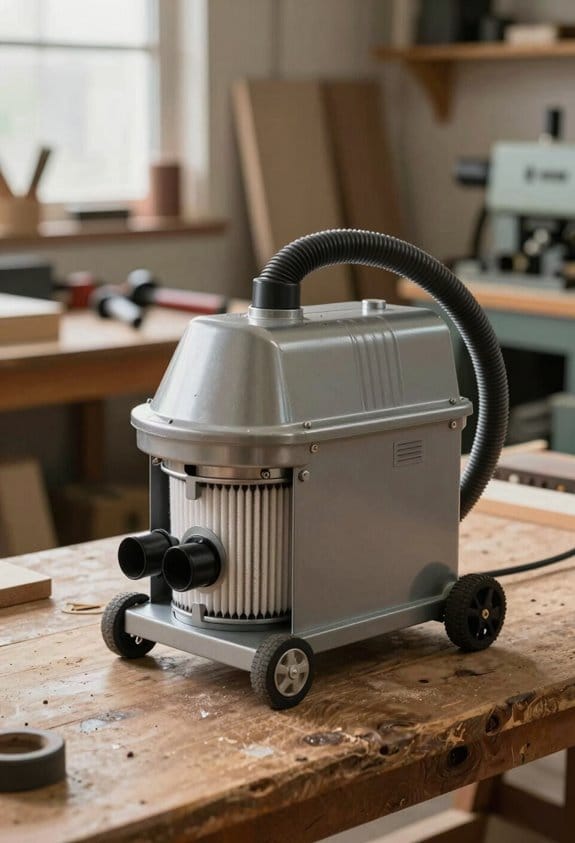
Have you ever tried working in a cramped workshop, only to be overwhelmed by dust and debris? Portable dust collectors can really come in handy in these tight spaces, helping you stay productive without hogging your valuable real estate. These little guys are perfect for smaller setups since they don’t need a ton of installation or complicated ductwork, keeping your floor space free and clear.
The beauty of portable dust collectors is that they also save you money upfront. Compared to big, centralized systems, these compact units make managing dust a lot more budget-friendly. Plus, you can easily move them around to service various machines, adapting to your production needs on the fly.
Here’s the trick: you can position multiple portable units near several dust-generating points, ensuring thorough filtration wherever you need it. So, why does this matter? Keeping your workspace clean not only boosts productivity but also reduces health risks.
In the end, having portable dust collectors at your disposal lets you maintain a tidy environment without the hassle of a major setup. Just think about how much more efficient your workflow could be if you could tackle dust challenges easily, no matter where you are in your shop. What’s stopping you from checking them out? Many models feature HEPA filtration that captures nearly all the fine dust particles, making your workspace much healthier.
What to Watch Out for With Portable Dust Collectors?

Evaluating portable dust collectors isn’t just about checking specs; it’s about understanding what they can and can’t do for you. These units certainly provide flexibility, but they come with some real drawbacks. For one, they’re not built to last as long as central systems. You’re looking at a lifespan of 5 to 10 years, while central setups often go for 15 to 25 years. That means more frequent replacements and added costs down the line.
Regular maintenance isn’t just a recommendation; it’s a must. If you neglect the filters, you’ll find they wear out faster, which can really hit your efficiency hard. And let’s face it—no one enjoys moving these portable systems all around, right? If you find yourself repositioning them often, dust control might not be as effective as you hoped. So, why does this matter? Because effective dust control is key to a healthier workspace.
You should also think about the electricity costs. Multiple portable systems can use 20-40% more electricity than a properly sized central system. This can add up, making your operational costs creep higher than you might expect. Plus, managing several units increases labor costs. You’ll need to be on top of emptying dust bags or barrels frequently, which turns into more work—no one wants that. Considering airflow (CFM) ratings can help you understand the effectiveness of your dust collection system and ensure optimal dust removal.
Benefits of Central Dust Collection Systems: Space Saving and Efficiency
Have you ever found yourself tripping over portable dust collectors while trying to keep your workspace tidy? They’re flexible and have their perks, but let’s be real: central dust collection systems might just be the better option for most situations.
Centralized dust collection systems pull together all those messy dust points into a single unit, which means you can say goodbye to the clutter of multiple portable machines. It really helps in freeing up space in your workshop or garage. Plus, with one unit handling everything, you’re likely to see a boost in airflow efficiency, which can lower your power bills over time. It’s nice knowing that you can run multiple machines at once without the hassle of moving around those portable units.
So, what’s the upside? For starters, these centralized systems typically boast a longer filter life and require less maintenance. That means you spend less time worrying about upkeep and more time focusing on your projects. They’re also designed to fit your specific needs, ensuring that you’re getting the most out of your dust management system.
The best part is, if you’re serious about keeping your workspace clean and efficient, investing in a central dust collection system could be a smart move. Many central systems are equipped to handle dual inlet dust collectors, allowing connection of multiple tools simultaneously for increased productivity.
To sum it all up, while portable dust collectors have their place, central systems offer significant advantages that go beyond convenience. Have you considered making the switch?
Drawbacks of Central Dust Collection Systems to Consider
When it comes to keeping your workshop clean and efficient, central dust collection systems might seem like the perfect fix. But hold on—there are some real drawbacks you should think about before diving in.
For starters, if the central unit stops working, you could bring the whole shop to a grinding halt. That’s a scary thought, right? Think about the impact on your productivity. One failure can set you back significantly, and that’s not a position anyone wants to be in.
Then there’s the cost of getting these systems up and running. You’ll likely face hefty installation fees, not to mention you’ll need to invest time in planning and making upgrades to your infrastructure. And let’s face it—navigating the regulations can be a headache. Outdoor installations? Better be ready to deal with permits and NFPA codes, which complicate everything.
Don’t forget about safety features. Central systems usually require investments in extras, like spark detection systems. Sure, they’re important, but they’ll drive up your overall expenses.
With these heavy upfront costs, smaller shops might end up feeling stuck. Instead, they might opt for portable options that might not pack the same punch as a central system. Portable dust collectors can work fine for some issues, but they can’t always keep pace with the efficiency of a centralized approach over time.
Additionally, selecting M Class dust extractors with features like automatic HEPA filter cleaning can offer continuous, efficient dust control that might better suit smaller or variable work environments.
Cost Comparison: Upfront vs. Long-term Investment
When you’re setting up a dust collection system for your workshop, the cost is a big deal. Have you ever thought about how those upfront prices compare to what you’ll spend over time? Sure, portable dust collectors might catch your eye with their lower price tags. It’s tempting to grab one right away, especially if you’re trying to stick to a budget.
But here’s the trick: if you take a closer look, those central dust collectors could actually save you money in the long run. For starters, they can use anywhere from 20% to 40% less electricity. When you add that up over the years, it starts to make a difference. And their lifespan? Central units can last 15 to 25 years, while portable systems usually only go for about 5 to 10 years before they need replacing. That’s a significant gap!
Then there’s the maintenance factor. Central systems generally have lower filter replacement costs, and they don’t require as much labor. You’re not just saving on your energy bills; you’re also cutting down on ongoing upkeep. So, why does this matter? Because while that portable system might be an easier hit to your wallet now, the total costs of ownership for a central system could end up being much more favorable for your shop.
To wrap it up, it pays to think long-term when you’re choosing your dust collection system. Sometimes, the more significant investment upfront can lead to more money saved later on. Are you ready to weigh your options or dive in with that portable system? Additionally, using corrosion-resistant materials in your dust collection setup can reduce maintenance costs and extend system life.
How Maintenance Differs Between Portable and Central Systems
Have you ever felt overwhelmed by the upkeep of your workshop’s dust collection system? You’re not alone! It’s a common concern, especially when deciding between central and portable dust collection systems. Understanding how each one handles maintenance can save you time, effort, and possibly some cash down the road.
Central dust collection systems usually require less maintenance. They often come with automatic pulse cleaning mechanisms that help keep the filters clean longer, reducing the frequency of your hands-on work. That’s a big plus if you want to focus more on your projects than on upkeep. On the flip side, portable units need your attention more often. You’ll find yourself regularly cleaning the filters and emptying the dust bins, which can feel like a hassle when you’d rather be building something.
Think about the lifespan as well. Portable systems typically last around 5-10 years, while central systems can stick around for 15-25 years. Fewer issues often mean fewer headaches with centralized options, which can make a big difference in the long haul. Plus, preparing for those dusty filters can hit your wallet hard: replacing filters for portable units usually costs 30-50% more. When you’re managing several portable units, those extra maintenance tasks can pile up and lead to higher labor costs, too.
So, why does all this matter? It all ties back to keeping your workshop efficient and productive. Whether you go with a central system or a portable one, keep these differences in mind to make the right choice for your setup. Many central dust collection systems also feature HEPA filtration, which captures over 95% of fine dust particles and contributes to better air quality and longer filter life.
Environmental Impact of Dust Collection Systems: Which Is More Sustainable?
When you think about cleaning up your workspace, have you ever considered what that actually does to the environment? The dust collection systems you choose play a big role in that. Central collection systems are often 15-30% more efficient in terms of electricity compared to portable collectors. That means they can save you some serious energy in the long run.
What’s nice about central systems is that they pull everything together in one place, making waste easier to manage and reducing your environmental impact. Portable units, on the other hand, might produce cleaner waste that you can recycle, but they can make it tougher to recover materials effectively. A big thing to think about is noise levels. Central systems tend to operate at lower decibel levels, meaning they’re quieter and make for a happier work environment.
When it comes to filter disposal, both options have their challenges. However, central systems usually come out on top because they last a whole lot longer—around 15 to 25 years, compared to only 5 to 10 years for those portable units. So, what’s the takeaway here? Central systems generally present a more sustainable choice.
Additionally, many dust collectors feature adjustable heights, enhancing dust capture efficiency and reducing airborne particles that impact the environment.
Honestly, choosing the right dust collection system not only benefits your workspace but also the planet. Have you figured out which kind you’ll go for?
Real-World Applications: Selecting the Right Dust Collection System for Your Needs
Which dust collection system fits your specific needs best? If you’ve got a small workshop, portable systems might just be your best bet. They’re easy to move around, letting you tackle multiple dust sources without breaking the bank on installation costs or ductwork.
On the other hand, if you’re managing a larger facility, a central system could be the way to go. With these systems, all the dust gets funneled into one stationary unit, which can really boost filtration efficiency. Central systems often achieve MERV ratings between 11 and 15, while portable units typically range from 10 to 13. So, why does this matter? Simply put, central systems can significantly enhance air quality and protect worker health.
Now, it’s true that central systems usually come with a higher upfront price tag. However, don’t let that scare you off. They can lead to long-term savings of 20-40% in energy and maintenance costs, especially when you’re dealing with the consistent dust collection needed in bigger setups.
If you’re unsure about what fits your needs, consider the scale of your operations and how often you’ll be moving the equipment. Remember, the right choice can make a big difference in your workshop’s environment. Additionally, incorporating a dust separator kit can greatly improve dust containment efficiency and reduce drum clogging for better system performance.
Frequently Asked Questions
Can I Combine Portable and Central Dust Collection Systems?
Yes, we can combine portable and central dust collection systems. By considering system compatibility, workflow efficiency, space constraints, budget considerations, maintenance requirements, and performance expectations, we can create an effective setup tailored to our needs.
How Do I Choose the Right Size Dust Collector?
Choosing the right size dust collector’s not as complicated as it seems. We assess capacity, consider workspace dimensions, guarantee airflow meets our tool compatibility needs, prioritize collection efficiency, and keep budget considerations front and center.
What Type of Filters Do Dust Collectors Use?
Dust collectors generally use several filter types, like HEPA filters for high efficiency, and cyclone separators for larger particles. We must consider filter efficiency, maintenance, and lifespan for effective and long-term dust management in our workspace.
Are There Noise Differences Between Portable and Central Systems?
When we think of noise levels, portable systems often hum like a busy bee, while central systems tend to echo in a quieter room. Good sound insulation and effective sound management can truly enhance our user experiences!
How Often Should I Replace Dust Collector Filters?
We should replace dust collector filters every 6-12 months, depending on usage. Keeping an eye out for signs the filter needs replacing helps maintain peak filter efficiency. Effective filter cleaning can also extend filter lifespan.


