As an Amazon Associate, we earn from qualifying purchases. Some links on this site are affiliate links at no extra cost to you. Our recommendations are based on thorough research and editorial judgment.

Understanding Workshop Electrical Capacity and Load

Have you ever faced the frustration of tools tripping circuit breakers in your workshop? It can be a real headache, but understanding your workshop’s electrical capacity and load is key to keeping things running smoothly.
Most workshops will have an electrical capacity somewhere between 200 to 400 amps. If you’re working with an older setup, though, you might be looking at just 60 to 100 amps. That’s a big difference!
To avoid problems, it’s super important to do regular load calculations. This is where the 80% rule comes into play: always keep your continuous loads below 80% of your panel’s rating. This helps ensure you’re not overloading the system.
So, how do you know if you’re hitting those limits? Keep an eye out for signals like flickering lights. These could be telltale signs that your setup needs attention. If you notice this, it might be time to call in an electrician for some upgrades.
Think about it—knowing your electrical capacity not only keeps your tools safe but also helps you work more efficiently. You’ll avoid interruptions and potential hazards that come with overloading circuits.
In summary, keeping track of your electrical load makes a big difference. Have you checked your workshop’s capacity lately? It might be worth a look!
Key Takeaways
- Electrical capacity typically ranges from 200 to 400 amps, but older workshops may only support 60 to 100 amps.
- Regular load evaluations ensure circuits can handle the actual power demand from tools without exceeding their capacity.
- Apply the 80% rule to avoid overloading circuits, ensuring continuous loads do not exceed 80% of their rated capacity.
- Calculate total wattage by listing tools’ ratings and using the formula: Amps = Watts ÷ Volts to determine necessary capacity.
- Monitor for warning signs like flickering lights or burnt outlets, and consult a professional for any system strain before adding heavy equipment.
Understanding Electrical Capacity: Why It’s Essential for Workspaces
Have you ever tried to plug in a new tool, only to find that your workspace’s electrical system can’t handle it? It’s a common struggle, but understanding your electrical capacity is key to ensuring everything runs smoothly and safely. Your workspace’s electrical capacity, usually between 200 to 400 amps, determines how much power you can use before things start to trip. This matters—if you push your capacity too far, you risk overloading circuits and creating some serious hazards.
So, what’s the rule of thumb? You should always keep your total electrical load under 80% of your capacity. This not only keeps your workspace safe, but it also ensures that you’re using energy efficiently. If you’ve got an older workshop that only provides 60 to 100 amps, you’re likely going to run into some problems when trying to support modern tools and appliances. Upgrading your electrical system might be more necessary than you think.
Regular load calculations are vital, too. They help in making sure your workspace remains safe for everyone and all of your equipment. Honestly, keeping track of this stuff might seem tedious, but it’s crucial for avoiding potential pitfalls down the line.
To sum it up, understanding your electrical capacity can save you time, money, and a lot of headaches. Are you prepared for the demands of today’s tools in your workshop? Integrating a dust collection system can also impact your electrical load and improve overall air quality and safety.
How to Assess Your Workshop’s Electrical Capacity
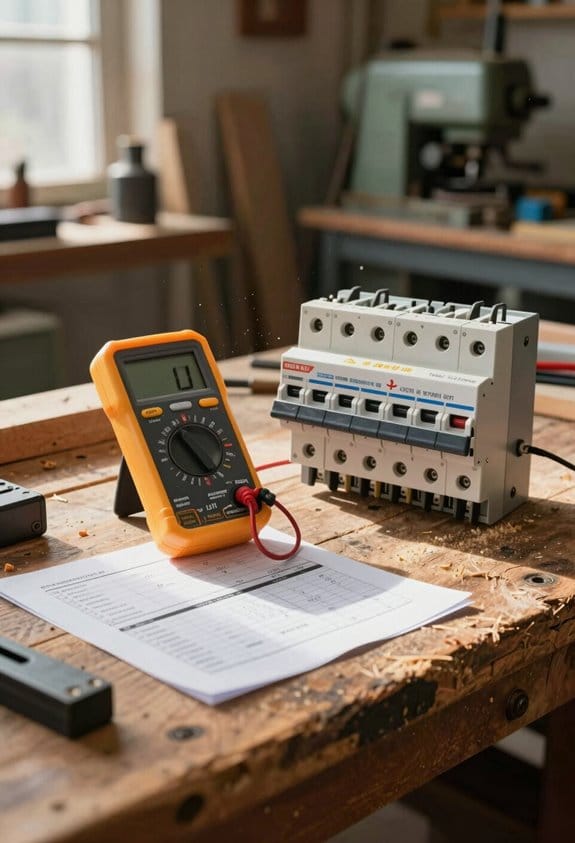
Is your workshop ready for the electrical demands of your tools? It’s a good idea to assess your workshop’s electrical capacity to avoid potential overloads or failures. Start by checking the amperage capacity label on your main electrical panel; you’ll usually find it somewhere between 100 to 200 amps.
Next, you’ll want to calculate the total wattage for all the tools and equipment you plan to run at the same time. Here’s the trick: make sure that total wattage doesn’t exceed 80% of your panel’s capacity. To figure out how many amps your equipment draws, you can use the formula Amps = Watts ÷ Volts. For example, if you’ve got a tool that runs on 120 volts and is rated at 1,200 watts, it’s pulling 10 amps.
But hang on! Don’t forget about continuous loads like air compressors. These should also stay below 80% of their circuit capacity for safe operation. So, why does this matter? Well, keeping your equipment within these limits not only prevents electrical failures but also keeps everyone in the workshop safe.
In the end, checking your workshop’s electrical capacity isn’t just a chore; it’s a crucial part of being a responsible maker. For instance, when selecting powerful tools like a 16-gallon shop vac with high motor power, understanding your electrical limits helps prevent overload. Have you assessed your workshop’s capacity recently?
The Critical Difference: Electrical Capacity vs. Load
Have you ever wondered why your circuit keeps tripping or why your workshop lights flicker when you power up that heavy-duty tool? Understanding the difference between electrical capacity and load can help you avoid those annoying problems and keep your projects running smoothly.
Electrical capacity is all about the maximum amount of electricity your circuit can handle, usually measured in amps. On the other hand, electrical load reflects the actual demand your equipment puts on the system at any given time. For instance, a 200-amp panel is designed to handle around 160 amps safely, which translates to about 38,400 watts of power for your appliances. Keeping an eye on your load is key; ideally, you want it to stay under 80% of that capacity to maintain safe operation.
So, how do you keep everything running safely? Regular load evaluations are essential. They help ensure your electrical systems meet your current needs and alert you if it’s time for upgrades before you run into potential overloading issues. Honestly, no one wants to deal with a blown circuit when you’re knee-deep in a project.
One overlooked factor is that high-performance equipment such as M Class dust extractors demand consistent power to maintain efficiency and safety in workshop environments.
Pay attention to these tips:
- Check your circuit capacity periodically. Are you running too many tools at once?
- Keep a log of your equipment demands. It can help spot trends over time.
- If you’re consistently hitting high loads, consider if it’s time to upgrade your electrical system.
Recommended Products

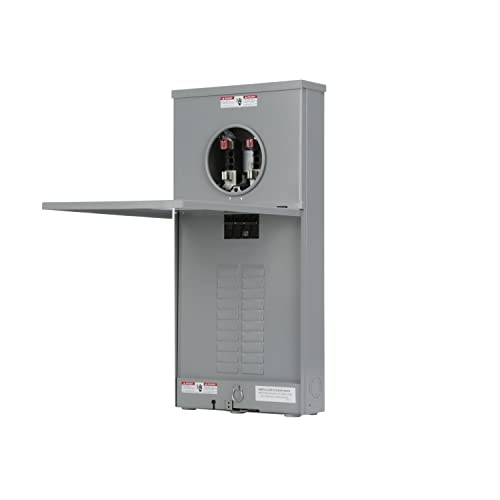
Suitable for use only as service entrance equipment

Uses Electric enter RX type hubs for overhead feed, HC type for underground feed
What Is the 80% Rule for Electrical Load?
Ever find yourself tripping a circuit breaker when you’re using multiple tools at once? It can be frustrating and a little scary. That’s where the 80% rule comes in handy. This guideline helps us keep our electrical circuits safe and efficient.
The rule says that if you’re using a continuous load—like when some gadgets run for three hours or more—you shouldn’t push it beyond 80% of what the circuit can handle. For example, if you’ve got a circuit rated at 20 amps, you should stick to a maximum of 16 amps (20 amps x 0.8 = 16 amps).
So, why does this matter? Well, going over this limit can lead to some serious problems, like wires overheating, frequent breaker trips, or even fire hazards. That’s why it’s especially crucial to pay attention when you’re running heavy machinery or tools at home.
Here’s the trick: always check your devices’ amperage and add up the total you plan to use. If it’s close to or over that 80% mark, don’t hesitate to unplug something or consider using a different circuit.
Truth is, following the 80% rule not only keeps you safe but also helps your electrical system run more smoothly. Trust me, keeping an eye on your load can save you a lot of headaches down the road. Have you checked your circuit load recently?
For example, powerful equipment like a 3HP motor dust collector often requires careful adherence to load limits to avoid electrical issues.
Recommended Products

1500VA / 1350W Pure Sine Wave UPS battery backup

1000VA / 800W Pure Sine Wave UPS battery backup

5kVA / 5,000 watt step-down isolation transformer converts 208V to 120V
How to Calculate Your Workshop’s Electrical Load
Calculating the electrical load for your workshop might seem a bit dull, but trust me, it’s super important. Think about it—nobody wants to deal with potential hazards or tools that just won’t work right. So, let’s dive into how you can get this done without a headache.
First off, make a list of all your tools and equipment along with their wattage ratings. You can usually find these on the product labels. Once you’ve got that down, it’s time to do some math. You can calculate the total wattage your workshop will require. It’s simple: use the formula Amps = Watts ÷ Volts, keeping in mind that your voltage is likely 120V or 240V.
But here’s the thing: the circuit’s capacity is the maximum load it can handle. So, what’s the big deal? Well, to keep everything safe, you should stick to the 80% rule. This means you should only use 80% of your circuit’s capacity to ensure you don’t overload it. If you’re thinking about adding bigger tools or appliances down the road, consider whether you’ll need an electrical service upgrade. And don’t forget, consulting a licensed electrician for guidance is always a good idea.
Also, using tools with ergonomic grips and proper material durability, such as those made from high-carbon steel, can improve safety and performance in your workshop.
Finding the Right Wattage for Your Tools and Equipment
When you’re trying to keep your workshop running smoothly, understanding wattage requirements for your tools is super important. Ever had a situation where tools just don’t seem to work right or lights flicker? That often comes from not knowing how much power you need. You’ll want to check the wattage ratings on your tools’ nameplates or user manuals—this gives you the lowdown on their power needs.
For example, table saws can use anywhere from 1,500 to 3,000 watts. On the flip side, smaller tools like drills usually operate around 500 to 1,200 watts. If you want to dive deeper, you can find watts by multiplying amps by volts.
Here’s the trick: always remember the 80% rule. This helps you avoid those annoying flickering lights and prevents circuit breakers from tripping. Have you ever been in the middle of a project, and suddenly everything just shuts off? Yeah, it’s frustrating. So, are you keeping an eye on your main service panel? It’s crucial that it can handle the total electric load from all your tools.
Additionally, ensuring your workshop has proper dust collection not only improves air quality but also reduces power strain on your equipment by preventing dust buildup.
Ultimately, staying aware of the wattage your tools require can make all the difference in the safety and efficiency of your home workshop. Next time you gear up for a project, consider how well your power supply is set up to manage everything you need. Do you feel prepared to tackle your next DIY task?
Recommended Products

Distribute power to equipment: This 6 outlet power strip with 6 USB-A charging ports distributes power and charges USB enabled devices, and the 36 in. Metal Housing withstands the rigors of daily use. Includes optional mounting clamps.
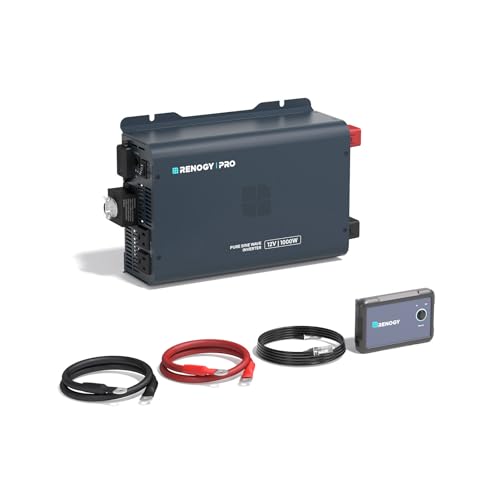
【High-Efficiency Powerful DC to AC Converter】: The Renogy Pro 1000W pure sine wave inverter converts 12V DC to 120V AC power with up to 92% conversion efficiency, reducing power loss by as much as 13% compared to standard power inverters. The clean, stable waveform safely powers sensitive electronics including RV refrigerators, microwaves, TVs, CPAP machines, laptops and off-grid appliances without buzzing or interference.

Safe, reliable power distribution ideal for distributing alternate waveform UPS or generator power in rack enclosures, network closets and more
Signs That You Need an Electrician for Upgrade Assessments
Have you ever wondered why your lights seem to dim every time you turn on a big appliance? It’s frustrating, and it might be a sign that your electrical system is struggling. Keep an eye out for some telltale signs that could mean it’s time to get an upgrade assessment.
If your circuit breakers are constantly tripping or fuses keep blowing, that could suggest your electrical load is pushing the limits of what your system can handle. You should definitely take these warnings seriously. Dimming or flickering lights, especially when you’re using things like your dryer or vacuum, often indicate an overloaded circuit, particularly in larger homes. It’s like a silent alarm that something’s not quite right.
Then there are the more serious warnings. If you ever catch a whiff of something burning or feel heat coming from outlets or switches, that’s an immediate red flag. Don’t wait—call an electrician right away. It could be a safety hazard you don’t want to ignore.
And let’s not forget about those heavy-duty appliances, like air conditioning units or electric car chargers. They can really strain your existing electrical setup. If you’re considering adding one of these into the mix, it’s smart to consult with a professional first to check if your system is up to the task.
Upgrading to equipment with HEPA filtration can also improve air quality in your workspace, reducing potential health risks associated with dust and debris.
Recommended Products

Product 1: CLEAR COLOR LCD DISPLAY: Circuit Analyzer with large color LCD provides easy-to-understand results for wiring faults, AFCI, GFCI, voltage drops, and device trip time

The Electrical Essentials Kits includes the tools you need to inspect and troubleshoot your home electrical circuits

[Directly Fit]: OE Replacement Power Window Regulator with 2 Pins Motor, Directly Fit
Frequently Asked Questions
What Is the Difference Between Single-Phase and Three-Phase Power?
Single-phase power’s benefits include simplicity and lower installation costs, while three-phase offers advantages like better load balancing, higher voltage levels, and improved motor efficiency, making it ideal for heavy machinery and larger applications in power distribution.
How Often Should I Have My Electrical System Inspected?
We should have our electrical system inspected at least annually. Regular maintenance guarantees voltage stability, prevents circuit overload, and adheres to compliance regulations, enhancing safety protocols while documenting safety records for professional evaluations and potential workshop upgrades.
Can I Use Extension Cords for Heavy-Duty Tools?
“A stitch in time saves nine.” We shouldn’t use extension cords for heavy-duty tools; it risks circuit limitations and voltage drop. Let’s prioritize extension cord safety, checking power ratings, tool amperage, and maintenance in our workshop setup.
What Should I Do if I Experience Electrical Surges?
If we experience electrical surges, we should check our surge protectors and circuit breakers, guarantee proper electrical grounding, and review appliance ratings. Using surge suppressors and power strips can help manage tool compatibility during voltage fluctuations.
How Can I Safely Increase My Workshop’s Electrical Capacity?
To safely increase our workshop’s electrical capacity, let’s consider power upgrades. We’ll assess load calculations, upgrade circuit breakers and electrical panels, adhere to wiring standards, follow safety regulations, and hire professional services for energy efficiency and tool requirements.


