As an Amazon Associate, we earn from qualifying purchases. Some links on this site are affiliate links at no extra cost to you. Our recommendations are based on thorough research and editorial judgment.

Understanding Micron Ratings in Dust Collection Filters

Have you ever wondered how effective your dust collection system really is? When we get into micron ratings for filters, it’s clear they’re crucial for figuring out how well a filter can catch different particle sizes. A 1-micron filter is great for snaring those pesky bacteria, while a 5-micron filter does a solid job with bigger particles like sand.
Knowing these ratings helps you pick the right filter, which can truly make a difference in keeping your air cleaner and boosting productivity.
So, why does this matter? A filter’s micron rating tells you what it’s capable of. If you’re dealing with fine dust or allergens, a filter with a lower micron rating might be your best bet. On the flip side, if you’re just trying to catch larger debris, a higher rating will suffice.
Here’s the trick: Look for filters that match your specific needs. If you’re in woodworking, a finer filter can capture the tiny wood dust. However, if your main concern is yard debris, a less dense filter could do the job well. It’s all about knowing what you’re working with.
Frankly, this is information worth keeping in mind when setting up your filtration system. By matching the right filter to your dust collection needs, you’re not just improving air quality—you’re also enhancing your workspace.
Do you know what microns your current filter handles? It might be time for a little upgrade.
Key Takeaways
- Micron ratings indicate filter efficiency by specifying the minimum particle size the filter can capture, crucial for effective dust collection.
- Lower micron ratings target smaller particles, essential for improving air quality and reducing health risks associated with fine dust and allergens.
- A 5-micron filter is suitable for larger dust particles, while filters below 1 micron are necessary for capturing harmful microorganisms.
- Combining finer filters with coarser pre-filters enhances overall filtration effectiveness and reduces clogging frequency in dust collection systems.
- Regularly checking and selecting the correct micron ratings ensures optimal performance, extending filter life and maintaining a clean work environment.
Why Are Micron Ratings Important for Dust Collection?
Why Are Micron Ratings Important for Dust Collection?
Ever wondered why some dust collection systems seem way more effective than others? It often comes down to micron ratings, which are crucial for figuring out how well your filters are going to work. Choosing the right filter, based on its micron rating, can make all the difference in keeping your workspace clean and efficient.
For example, a 1-micron filter can catch tiny particles like bacteria, which is essential when you want a safe environment. On the other hand, if you’re dealing with stuff like sand or rust, a 5-micron filter does the job just fine. You don’t want to go too high with the micron rating, though—filters that can’t catch the right sizes not only let larger particles pass through but also might hit you with extra maintenance costs down the road.
So, why does this matter? Understanding the efficiency percentage that comes with the micron rating is key. It tells you how well the filter can trap specific sizes of dust, which influences how effective your dust collection system will be at meeting your needs. Make sure to think about what you’re trying to filter out next time you’re picking a filter.
High-quality dust extractors with HEPA filtration can capture 99.97% of particles down to 0.3 microns, significantly improving air quality and health safety.
In short, understanding micron ratings helps you make smart choices about dust collection, leading to better performance and lower costs. Have you checked if your filters are doing their job lately?
Recommended Products

10X HIGHER SUCTION POWER than standard dust collectors and the only dust collection system on the market with high enough levels of static pressure (WC) and airflow (CFM) to effectively capture and contain dust from every tool in the shop with a dust port size of 1” to 5”. BEST DUST COLLECTOR – Popular Mechanics 2020 Tool Awards

Advanced HyperHEPA Filtration: Designed to remove and trap 99.995% of all airborne particles down to 0.003 microns, the Atem X supplies unequaled protection against dust, pollen, pet dander, smoke from wildfires, and more. True HEPA filtration

Grizzly Industrial G0548ZP - 2 HP Canister Dust Collector with Aluminum Impeller - Polar Bear Series
With the canister filter, simply turn the handle on the top a half turn in either direction to cleaning the canister
What Are Micron Ratings?

Have you ever wondered how effective a filter really is? Micron ratings are your key to understanding what particles a filter can catch. The lower the micron rating, the smaller the particles it’s able to trap. This matters a lot, especially if you’re trying to purify water or air in specific settings.
When it comes to choosing the right filter, those micron ratings are everything. They can help you find the right filter media for your needs, whether you’re dealing with a home aquarium, a car’s oil filter, or industrial equipment. For instance, a filter with a rating below 1 micron is usually reserved for high-purity applications, while one that goes up to 50 microns is perfect for catching larger particles that you can see with your naked eye.
Let’s break that down a bit. If you pick a filter rated at 1 micron, it’s designed to snag particles that are 1 micron or larger, which means it’ll catch a lot of harmful contaminants. So, if you’re in an environment where that kind of protection is crucial, this is what you need.
Truth is, knowing these ratings helps you make informed choices, optimizing how well your filtration system works. It’s about addressing those smaller particles that could cause bigger problems down the line.
In the end, the right micron rating can make all the difference. Have you thought about what kind of filtration you need for your personal or professional spaces?
Effective filters, such as HEPA filters, are capable of capturing 99.97% of particles as small as 0.3 microns, making them ideal for improving air quality in many environments with HEPA filtration technology.
Recommended Products

3-Stage Filtration System: AlorAir Cleanshield HEPA 550 Air Scrubber build with Airflow 270-550 CFM with Variable Speed as a portable HEPA air purifier. It can be used with up to 3 levels of filtration, pre-filters, activated carbon/HEPA filters.

MADE IN USA - Made in our factory in Royal Oak Michigan using domestically sourced componentry.
Understanding the Size of Particles in Dust Collection

Why is it that dust collection often feels like a losing battle? Particle size is crucial for effective filtration, but most folks don’t realize just how small some of those pesky particles can be.
Fine dust often measures between 1 to 10 microns. It’s similar in size to tiny bacteria or allergens that are hard to spot with the naked eye. On the other hand, human hair ranges from 40 to 90 microns, making it a lot easier to filter out those larger particles. So, the next time you’re vacuuming or running your air purifier, think about how those microplastics come into play. They can be just under 3 microns, which really drives home the importance of choosing filters that can catch these tiny troublemakers.
And here’s the kicker: particles smaller than 5 microns can be incredibly harmful when inhaled. Seriously, they can lead to significant health issues! This is why you need to invest in better filtration systems for your space. Systems featuring HEPA filters can capture over 95% of particles as small as 0.3 microns, greatly improving air quality.
Recommended Products


How Micron Filtration Works in Dust Collection
When it comes to dust collection, have you ever wondered how those systems actually catch all those tiny particles that can mess with our air quality? Understanding micron filtration is key. Filters come with different micron ratings, and those rated at 1 or 2 microns are super important in places like factories or medical settings—where cleanliness is non-negotiable.
Dust particles can vary a lot in size. Think about it: larger ones, like pollen, are around 10 to 100 microns, while the really small culprits—like bacteria—only measure about 0.5 to 5 microns. So, what’s the best approach? A mix of filter sizes usually does the trick! Pre-filters can help improve how well the system captures those pesky particles.
As dust begins to accumulate, you’ll notice these filters start to build a “dust cake.” This may sound odd, but it actually helps improve particle capture while also extending the life of the filters. Your air quality ends up being better for it!
Now, isn’t it interesting how something so small can make such a big difference in keeping your environment safe? By understanding how micron filtration works, you can make informed choices for cleaner air. Keeping your space dust-free is a small effort with a whole lot of benefits! Utilizing dust extractors with HEPA filtration that captures 99.97% of particles ensures optimal dust control and improved air quality.
How to Choose the Right Micron Rating for Dust Collection?
How can you ensure your dust collection system actually captures the right size particles? Picking the correct micron rating is crucial for effective particle capture. For example, a 5-micron filter will do fine for dust larger than that size. But if you’re dealing with finer particles like bacteria and mold spores, you’ll want a filter that’s rated at 1 micron or less.
Don’t forget to think about the filter size, as well as the system’s flow rate and pressure needs. Lower-rated filters can sometimes choke airflow, which isn’t ideal. So, what’s the solution?
Here’s the trick: using a finer filter paired with a coarser pre-filter can really up your system’s efficiency and help prevent clogging. This combo is especially worth it in messy environments where dust collection is a must.
In short, make sure you’re choosing the right micron rating for your dust collection system to keep your workspace clean. Have you checked your filters lately? Considering the filtration efficiency of materials like heavy-duty woven cloth and nonwoven fabrics can significantly improve both durability and particle capture.
Recommended Products

Cyclone's two-stage separation provides more working CFM than comparable horsepower single-stage units

Powerful Makita-built motor delivers 127 CFM and 96" water lift of suction using corded power
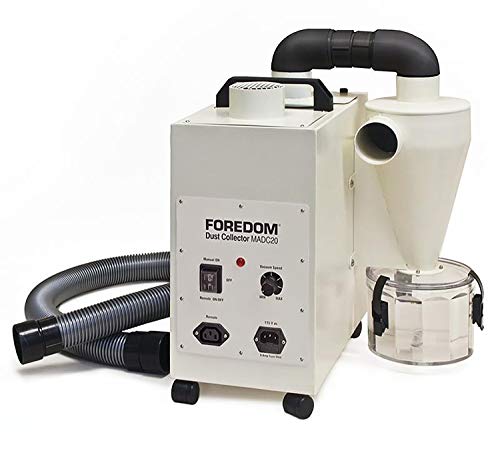
Includes: Cyclone dust collector with collection chamber, Remote Switch Box with 9 Cable, Remote Cord for connecting and powering on the MALC15 Lighted Work Chamber, 6′ Power Cord, 5′ Vacuum Hose Assembly, 2 HEPA Filters. Filter has a 16 Merv Rating, 99.8% of all particles 0.3 micron and larger
Key Applications of Micron Ratings in Dust Collection
Have you ever looked around your workspace and wondered why there’s so much dust floating around? It might be time to take a closer look at your dust collection system—specifically the micron ratings of your filters.
Let’s break this down. A 5-micron filter is a solid choice for general-purpose needs. It does a great job of catching debris like sand, rust, and other larger particles. This means less frequent clogging, which can save you a headache and keep your equipment running smoothly.
When it comes to airborne pollutants, you’ll definitely want to think about a 1-micron filter. Why? Because it captures those really fine particles, even bacteria, that could be making the air in your workspace less healthy to breathe. If improving air quality is a priority for you, this is a filter you can’t afford to ignore.
For equipment protection, a 10-micron filter is where it’s at. It effectively blocks medium-sized particles and helps maintain airflow, which can ensure your machinery operates at peak performance.
So, what does all this mean for you? By being aware of the different particle sizes and their corresponding micron ratings, you can choose the right filters for your specific needs. This not only increases filtration efficiency but also extends the life of your filters.
In the end, it all boils down to making smart choices that improve your work environment. Are you ready to tackle that dust problem head-on?
Consider also the importance of a bag filter system as seen in models like the JET DC-650BK, which captures 96% of dust particles and supports quieter operation.
Recommended Products

Cyclonic action separates the heavy dust particles from the fine particles and drops them into the 55-gallon steel drum

Captures 99% of 2-micron particles, and 86% of 1-micron particles

Cyclone's two-stage separation provides more working CFM than comparable horsepower single-stage units
Frequently Asked Questions
How Do Environmental Factors Impact Filter Efficiency Ratings?
Like a delicate dance, environmental factors shape filter efficiency. Humidity effects, temperature variations, and seasonal changes alter particulate size and dust concentration. Beyond that, air pressure, chemical exposure, and maintenance practices play pivotal roles in performance.
Do Different Materials Affect Micron Performance in Filters?
Different materials definitely affect micron performance in filters. By comparing filter media’s durability and efficiency against various dust particles and contaminant types, we can determine ideal filtration techniques and enhance collection efficiency while extending filter lifespan.
What Is the Lifespan of Dust Collection Filters With Specific Micron Ratings?
The lifespan of dust collection filters varies based on filter media types, maintenance schedules importance, and usage frequency effects. We should evaluate clogging rates impact, conduct performance testing standards, and review manufacturer guidelines for ideal longevity.
Can You Layer Filters With Different Micron Ratings for Improved Filtration?
Yes, we can layer filters with different micron ratings to enhance filtration efficiency. This practice improves particulate reduction and overall filter performance, ensuring better air quality and effective dust collection while simplifying filter maintenance in our filtration systems.
How Does Airflow Rate Influence Filter Performance Based on Micron Ratings?
Airflow rate affects filter performance; higher velocities can lead to airflow reduction and increased filter clogging. By considering micron comparison and particle size, we enhance filter selection, system design, and improve efficiency testing and filter maintenance.


