As an Amazon Associate, we earn from qualifying purchases. Some links on this site are affiliate links at no extra cost to you. Our recommendations are based on thorough research and editorial judgment.

Understanding Noise Reduction Ratings in Hearing Protection

Have you ever found yourself in a noisy environment wondering if your hearing protection is actually doing its job? Understanding Noise Reduction Ratings (NRR) in hearing protection is crucial for keeping our hearing safe in loud places.
So, what exactly is NRR? Think of it as a measure of how much noise a device can block, rated in decibels—from 0 to 30 dB. The higher the number, the better the protection. If you’re often around noise levels above 85 dB, it’s smart to aim for devices with an NRR of 20 to 30 dB.
Here’s the trick: to figure out how effective the NRR is for your situation, you can subtract 7 from the NRR and then divide by 2. For example, if you have an NRR of 25, the effective noise reduction you’d get is 9 dB.
Frankly, it’s important to not just grab any old ear protection. You want to make sure it’s suitable for the noise levels you’re up against.
So, why does this matter? Well, protecting your hearing today can save you from serious issues down the line, like hearing loss.
The best part is there’s so much more to discover about improving your hearing protection strategies. By being informed about NRR, you can make better choices that truly shield your ears.
In short, pay attention to those ratings and find the right fit for your needs. What’s your go-to tip for staying safe in loud environments?
Key Takeaways
- Noise Reduction Rating (NRR) indicates sound reduction levels for hearing protection, ranging from 0 to 30 decibels; higher NRR means better noise reduction.
- To calculate effective noise exposure, subtract 7 from the NRR and divide by 2, ensuring proper understanding of protection levels.
- OSHA requires hearing protection for noise exposures of 85 dB or higher over an 8-hour shift to mitigate hearing damage risks.
- Combining earmuffs and earplugs increases protection by adding 5 dB to the higher NRR, enhancing overall noise reduction effectiveness.
- Proper fit and comfort are crucial for hearing protection; ensure a snug seal for maximum efficiency and safety.
What Is Noise Reduction Rating (NRR) and Why Is It Important?
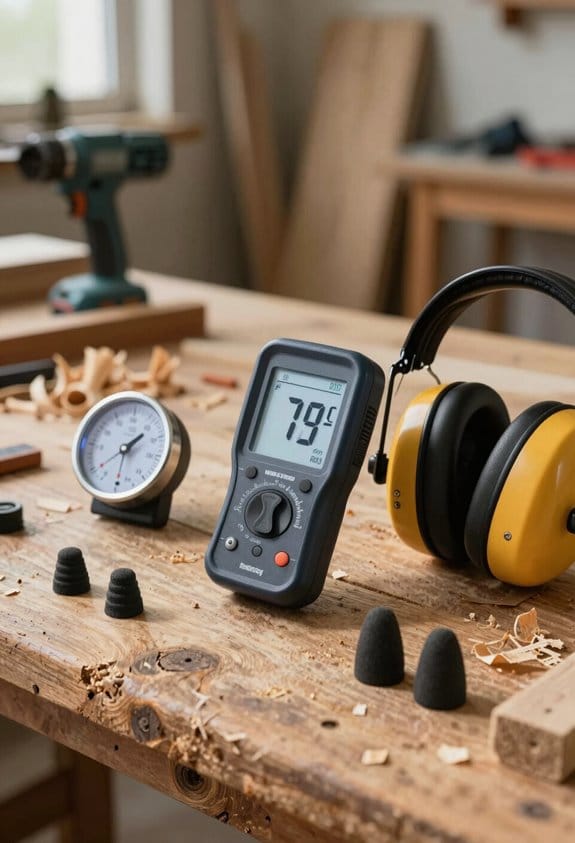
Have you ever walked into a noisy job site and thought, “How am I going to protect my ears here?” If you’re working around loud machinery or in a bustling environment, understanding Noise Reduction Rating, or NRR, is crucial for your safety. Basically, NRR is a measure of how much sound these hearing protection devices can really cut down. The ratings go from 0 to about 30 decibels, and in practical terms, higher numbers mean more potential quieting power.
So, how do you actually figure out your real noise exposure? Here’s a trick: take the NRR, subtract 7, and then divide by 2. This little formula gives you a more accurate idea of what you might actually experience. If you’re in a workplace that hits 85 dB or more on average over an 8-hour shift, OSHA says it’s time to wear some hearing protection, which makes NRR all that more important.
Truth is, just having the right gear isn’t enough. You’ve got to make sure it fits well and you wear it all the time. Otherwise, you’re not going to get the full benefit, and that defeats the purpose of protection. Also, it’s important to choose ear muffs that meet accepted safety certifications like ANSI S3.19 to ensure reliable noise reduction.
What Are Decibels, and Why Should You Care?

Ever wondered why some sounds seem to creep under your skin, while others don’t? It all comes down to decibels (dB), the unit we use to measure sound intensity. When it comes to noise, we often hear about 60 dB in a normal conversation, but things get serious when we hit that 85 dB mark. That’s where prolonged exposure can start to risk hearing damage, especially if you’re in a loud environment.
Think about your daily life. Are you in a job or situation where noise is just part of the deal? The Occupational Safety and Health Administration (OSHA) actually requires hearing protection for anyone exposed to noise levels at that 85 dB threshold over an 8-hour work shift. It’s not just a guideline; it’s about protecting your hearing. If some sounds around you reach 90 dB or more, the risk of hearing loss ramps up significantly. So, what can you do?
Here’s the trick: pay attention to your environment and protect your ears. Understanding how decibels work helps you make better decisions about hearing protection. If you’re using tools or working in a loud area, consider using equipment with a higher Noise Reduction Rating (NRR). This can really help safeguard your hearing health in the long run.
Honestly, it’s easy to overlook. We bump into noise every day, but not everyone realizes just how damaging it can be. So, are you taking the right steps to protect yourself? It’s worth considering, don’t you think? Just remember, the choices you make today can have a big impact on your hearing tomorrow. Choosing hearing protection with a suitable Noise Reduction Rating ensures the best defense against damage.
Measuring NRR: Methods and Impact on Hearing Safety

When it comes to hearing protection, do you really know what that Noise Reduction Rating (NRR) means for you? Understanding how NRR works can be a real lifesaver when you’re in noisy environments. Measured in decibels (dB), the NRR shows you how much noise a hearing protection device can block, and it usually falls between 0 to 30 dB. Higher numbers mean better protection against loud sounds.
So, how do you figure out what that NRR actually means for your everyday life? The trick is simple: subtract 7 from the NRR number and then divide by 2. This gives you a more realistic idea of the protection you’re getting. It’s crucial for staying safe, especially since OSHA requires hearing protection when noise levels hit 85 dB over an 8-hour shift.
Just think about it—you might be at a concert, working in a factory, or even just mowing the lawn. Choosing the right NRR is your first line of defense against Occupational Hearing Loss. It’s not just about the numbers; it’s about keeping your hearing intact for years to come. Ear plugs with multi-layered acoustic barriers can enhance noise-blocking efficiency, providing better real-world protection.
How to Choose the Right Hearing Protection Using NRR
How can you find the right hearing protection that suits your needs? It’s a good question, especially if you’re in a loud environment where hearing damage is a concern. Start by checking for devices with a Noise Reduction Rating (NRR) between 20 dB and 30 dB. This range is perfect for high noise levels. But don’t just stop there; to get a real idea of how much protection you’re actually getting, subtract 7 from the NRR and then divide that number by 2. This helps make sure you’re meeting OSHA standards for noise exposure.
Comfort matters too. If your hearing protection doesn’t fit well, it’s likely you’re not getting the full benefit, even if the ratings look good on paper. Think about it: would you wear something uncomfortable for hours while trying to focus on what you’re doing? Probably not.
If you want extra protection, consider double protection. This means wearing both earmuffs and earplugs. Here’s the tip: when you combine them, just add 5 dB to the higher NRR value for a better idea of the total protection you’ll get. Always remember to follow the manufacturer guidelines for the best fit and use.
In the end, it comes down to being smart about your options. How much do you value your hearing? Protect it wisely! Products designed with HEPA filtration systems can greatly improve air quality in noisy work environments where dust contributes to hearing hazards.
Why Proper Fit Matters for Noise Reduction
Have you ever found yourself in a noisy environment, wishing for a way to block out the sound? You’re not alone. A lot of folks underestimate how crucial a proper fit is for hearing protection, but it really can make or break your experience when it comes to reducing noise.
Think about it: if your earmuffs don’t fit well, they aren’t going to do their job. You want those earmuffs to fully cover your ears and create a snug seal. With earplugs, it’s important they’re inserted correctly into the ear canal. Everyone’s head shape and ear sizes are different, which means there’s no one-size-fits-all solution here. If your hearing protection doesn’t fit right, you could still be exposed to harmful noise levels, even if you’re using high-NRR rated products.
So, how can you get the best protection possible? A good tip is to combine earmuffs with in-ear audio headsets for added support—just make sure everything fits snugly. This can enhance noise reduction significantly, especially in those loud spaces.
Keep this in mind: taking the time to find the right fit isn’t just a minor detail. It’s about your safety and well-being. Are you ready to take that extra step for your hearing health? Remember that just as impact resistant glasses provide essential protection for your eyes, properly fitted hearing protection is equally vital for preserving your hearing.
How to Maintain Your Hearing Protection for Maximum Effectiveness
How often do you think about the state of your hearing protection? If you’re like most people, it’s probably not a regular check-in. However, keeping those devices in top shape is key to ensuring they do their job when you need them most. A little upkeep goes a long way, and it can save you from some serious hearing loss in the long run.
Let’s talk cleaning first. It’s crucial to follow the manufacturer’s instructions to keep things hygienic and comfortable. Clean gear is less likely to cause discomfort, and when you’re comfortable, you’ll be more likely to use them correctly. A quick wipe-down after use can often do the trick, but don’t forget to check for any specific cleaning recommendations.
Now, take a moment to inspect your earmuffs. Are there any cracks or signs of wear? As for earplugs, if they’re looking a bit worse for wear, that’s a sign it’s time for a change. Worn-out gear won’t protect you as well, which is why you should replace disposable earplugs after each use and stick to a schedule for reusable ones. Generally, replacing them every few months is a good rule of thumb.
Here’s a quick tip: store your hearing protection in a clean, dry spot away from sunlight. This simple practice can keep them in great shape for whenever you need them next. A little attention now can make a huge difference down the line. Additionally, maintaining the filter maintenance features of dust extraction equipment can help preserve air quality and reduce exposure to harmful particles that might impact your hearing in work environments.
Frequently Asked Questions
Can NRR Ratings Vary Between Different Manufacturers’ Products?
Yes, NRR ratings can vary considerably across manufacturers due to design differences, material impact, and product testing. We should consider user experiences, certification processes, and market trends when making informed consumer choices about hearing protection.
Do Environmental Factors Affect the Actual Performance of NRR?
Yes, environmental factors like humidity effects, temperature impact, and ambient conditions can influence NRR performance. Seal integrity, material composition, and usage duration also play roles, affecting acoustic barriers and wearability concerns across different noise frequencies.
Is There a Specific NRR Recommended for Musicians or Concert-Goers?
We recommend using earplugs with an NRR of 15-25 for musicians and concert-goers. This level balances sound exposure and frequency response, promoting auditory health while preventing hearing loss from high decibel levels during live performances.
How Do I Know if My Hearing Protection Is Still Effective?
We should regularly inspect our hearing protection for wear and tear, follow manufacturer advice on lifespan indicators, and guarantee proper fitting techniques. Comfort level matters too; frequent acoustic testing can confirm effectiveness against noise exposure.
Can I Use Multiple Hearing Protection Devices Together for Better NRR?
Yes, we can combine earplugs and muffs for enhanced NRR, leveraging layering protection. However, let’s consider comfort vs. effectiveness, product compatibility, and personal preferences to guarantee we comply with safety regulations in various acoustic environments.